
Grievance Redressal Conflict Resolution: Preventing Disputes and Building Trust
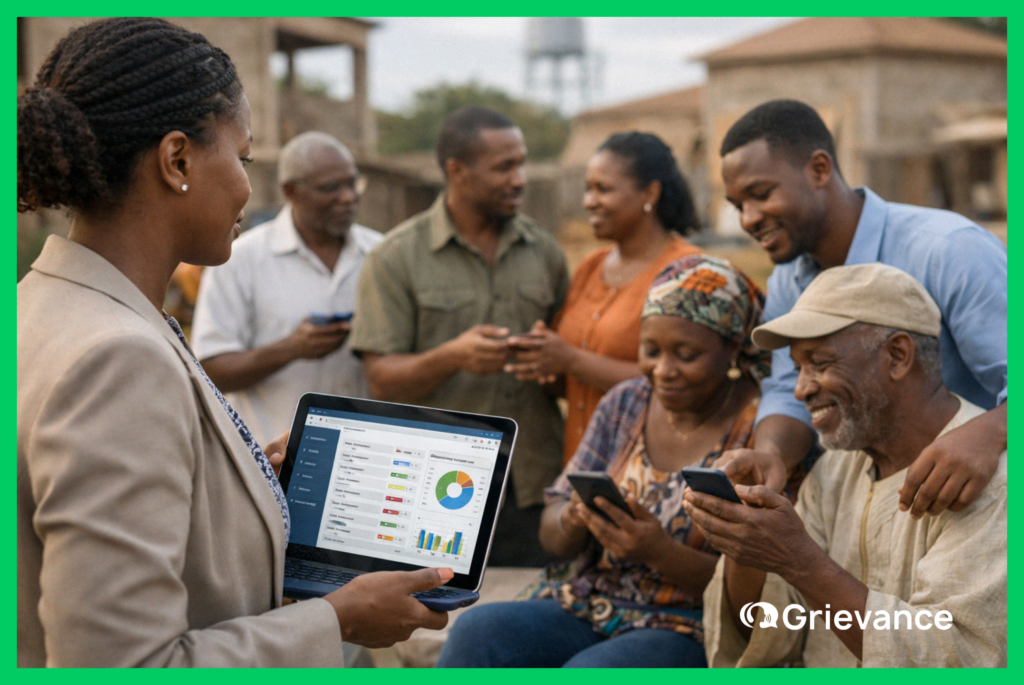
In many government and development projects across Africa, unresolved grievances can spark major conflicts. Complaints about land, services or environmental impacts, if ignored, often escalate into protests, delays or even violence. A well‐designed grievance redressal conflict resolution process provides a formal channel for affected communities to voice concerns early. By capturing and resolving issues promptly, such systems nip disputes in the bud and build stakeholder trust. Leading institutions now consider grievance redress mechanisms (GRMs) a core part of good governance and risk management.
For example, the World Bank’s ESS10 guidance notes that an effective grievance mechanism “provides project-affected parties with redress and helps address issues at an early stage”. In short, an accessible grievance platform turns potential conflicts into opportunities for dialogue and improvement.
Today’s digital grievance redressal platforms combine anonymity, real-time tracking, and multilingual access to ensure no complaint “slips through the cracks”. They enable governments, NGOs and funders to prevent conflicts before they erupt, while meeting international accountability standards.
In this article, we explain how proactive grievance mechanisms serve as early-warning systems, highlight key features of digital GRMs, and show why they are indispensable for conflict prevention and resolution, especially in diverse African contexts.
Grievance Redressal: Preventing and Resolving Conflict
A grievance redressal mechanism is more than a feedback box; it is a structured conflict-prevention tool. By providing citizens with a transparent channel to submit complaints, organisations can resolve issues before they escalate. Studies show that when small problems (like a water pump failure or noise pollution) are left unaddressed, they “fester” and eventually explode into larger disputes. For instance, communities that were unaware of construction dust or inadequate resettlement plans have staged protests or halted projects. In contrast, projects that address grievances early see increased cooperation and trust: one development toolkit cautions that ignored complaints are like “many small drops that can grow into an ocean” of conflict.
A proactive grievance strategy integrates complaint management from day one. This means planning multiple ways (web, mobile, SMS, or in-person) for stakeholders to report concerns. It also means acknowledging each grievance quickly and keeping complainants informed of progress. When organisations respond visibly and consistently, they build mutual understanding and nip “us vs. them” tensions in the bud. Transparent updates and fair processes reassure people that their issues matter. In short, a robust grievance redressal process shifts stakeholders from adversaries to partners, which is key to preventing conflicts.
Key benefits of proactive grievance redressal include:
- Early Issue Resolution: By catching complaints early, minor issues are resolved before snowballing into full-blown conflicts. A World Bank report notes that structured GRMs help “tackle problems before they erode the community’s trust”.
- Safe Outlet for Frustrations: A public grievance channel gives people a formal outlet for complaints. Knowing there is a fair process in place dissuades extreme actions like strikes or unrest.
- Accountability and Transparency: Documenting every step (timestamping grievances, assigning reference IDs) means nothing is hidden. Open processes build trust: in one African energy utility, customers saw that “each complaint gets logged, timestamped, and tracked,” which dramatically increased satisfaction.
- Trust and Legitimacy: When communities see leaders listening and acting, trust in institutions grows. Surveys show that resolving each complaint fairly “improves the organisation’s legitimacy” and social license to operate.
By converting grievances into dialogue, organisations not only avoid conflict but also demonstrate credibility and improve their reputation.
Grievance Redressal Platform for Digital Dispute Management
Modern grievance redressal platforms are digital systems that handle complaints end-to-end. They centralise submission, tracking, and resolution of issues, using technology to enforce best practices. Key features include:
- Multichannel Submissions: Stakeholders can file complaints via web forms, mobile apps, SMS or community kiosks. Grievance App, for instance, provides anonymous, 24/7 submission in any language through web or mobile. This wide reach ensures that vulnerable or remote groups can report issues early.
- Real-Time Tracking & Notifications: Each complaint gets a unique ID and appears on a live dashboard. Complainants receive acknowledgements and status updates, while staff see real-time alerts and deadlines. This transparency makes sure “no request goes lost in the pile”. Automated reminders and escalation rules keep the process moving and hold teams accountable.
- Multilingual & Inclusive Access: Effective platforms support the languages of affected communities. Grievance App, for example, handles over 100 languages and dialects (including French, Swahili, Portuguese, Hausa, Arabic, etc.). It even offers text-to-speech and high-contrast modes for accessibility. By removing language barriers, platforms ensure “no voice goes unheard”, which is crucial in diverse African settings.
- Structured Categorisation and Workflow: Complaints are tagged by category and urgency. Similar issues can be merged, and AI-based suggestions guide officers to solutions. This organised approach prevents bottlenecks – for example, digital GRMs have been shown to merge related grievances for coherent handling.
- Accountability & Compliance: Advanced platforms enforce role-based access, data encryption and audit trails. They can be configured to meet international standards (World Bank ESS10, IFC Performance Standards, GDPR, etc.). For instance, Grievance App is designed to comply with World Bank ESS10, ensuring funded projects automatically meet donor requirements.
- Analytics and Reporting: By aggregating grievance data, officials gain insights into systemic issues. Dashboards reveal trends (e.g. a cluster of water-supply complaints) so that root causes can be fixed. In one government case, centralised GRM data allowed managers to “spot trends more quickly, turning raw complaints into actionable insights”.
These capabilities transform a grievance system into an early warning system. For example, if many complaints flood in about a construction site’s environmental impact, the project team can intervene before unrest grows. In short, a digital grievance platform makes it practical to resolve complaints faster, equitably and transparently, which in turn prevents disputes from escalating.
Building Trust, Transparency and Compliance
Transparent grievance redressal directly fosters stakeholder trust and accountability. When citizens see a process that records and fairly handles each concern, they perceive the system as credible. Centralised grievance systems have achieved resolution rates over 99% with strong community trust, whereas fragmented systems breed rumours and distrust. In Africa, only about 34% of countries currently have unified complaint platforms, indicating much room for improvement.
A visible GRM also signals accountability to donors and partners. Major funders like the World Bank, African Development Bank or EU now require formal grievance mechanisms for projects. Meeting these standards is easier with a robust platform: governments can quickly generate reports and audit trails to satisfy World Bank ESS10 and similar policies.
Moreover, quick grievance handling reduces operational risks. Consider these outcomes seen in practice: Morocco’s digital complaint portal cut resolution times from weeks to days, and Rwanda’s integrated case management system processed 200,000+ cases with an 87% resolution rate. These examples show that investing in grievance infrastructure leads to smoother projects and positive public perception. Importantly, timely redress “defuses tensions that might otherwise lead to strikes, protests, or legal battles”. In essence, effective grievance redressal keeps projects on track, preserves budgets (by fixing small issues early) and enhances an organisation’s social license to operate.
Grievance Redressal in the African Context
Grievance mechanisms in Africa must be inclusive and context-sensitive. Many African initiatives span French, English and Portuguese-speaking countries, along with dozens of local languages (Swahili, Yoruba, Hausa, Arabic, etc.). A truly accessible GRM platform supports all major languages and dialects. For example, Grievance App’s multilingual interface allows people to file complaints in their mother tongue, instantly translate them for authorities, and receive answers in the same language. This inclusion is critical: when language barriers exist, communities feel unheard, and conflicts can flare. Multilingual systems have been shown to “reduce conflict and operational risks in multicultural environments”.
Technological accessibility is also key. In areas with low literacy or connectivity, having options like SMS or voice hotlines ensures no one is excluded. Community outreach and awareness programs must accompany any system: South Africa’s Presidential Hotline, for example, dramatically raised resolution rates from 39% to 89%, but also taught governments that even the best tools require user education.
Finally, local engagement matters. African success stories often involve blending digital platforms with traditional structures. In Rwanda, village chiefs and elders helped promote the national case management system, leading to its high uptake and trust. Similarly, Kenya’s cross-sector “Uwajibikaji Pamoja” grievance platform centralised complaints across agencies. These cases highlight that, beyond technology, strong political will and stakeholder collaboration are essential to fully realise the peace-building benefits of grievance redressal.
Conclusion
In conflict-prone environments, an effective grievance redressal mechanism is not optional; it’s essential. By providing a clear, structured pathway for issues to be heard and resolved, organisations prevent minor complaints from turning into major disputes. Digital GRM platforms like Grievance App make this process seamless: they log complaints with time stamps, enable anonymous and multilingual submissions, and keep everyone informed through to resolution. This transparency builds trust, ensures compliance with international standards, and ultimately safeguards communities from preventable conflicts.
Whether you are a government agency, international development organisation, or NGO working on community projects in Africa, a robust grievance redressal strategy will strengthen your outcomes and relationships.
Take the proactive step today: implement a grievance redressal platform to protect your projects and stakeholders. Request your free demo to see how Grievance App’s proven solution can enhance accountability, resolve disputes faster, and keep your initiatives on track.
FAQ
What is a grievance redressal mechanism, and why is it important?
A grievance redressal mechanism (GRM) is a formal process through which stakeholders (citizens, community members, or employees) can lodge complaints or concerns about a project or organisation. It is important because it channels disputes into a managed framework, preventing conflicts from spilling into protests or legal action. By addressing issues promptly and fairly, a GRM maintains trust and accountability.
How does grievance redressal help in conflict resolution?
Grievance redressal acts as an early warning system. When minor grievances are resolved quickly, they cannot accumulate into larger tensions. The formal process ensures that complainants feel heard and solutions are tracked. In practice, this means fewer unanswered complaints and a reduced likelihood of conflicts. Over time, consistently fair handling of complaints builds confidence that disputes will be settled without escalation.
What is a grievance redressal platform?
A grievance redressal platform is a digital system that manages the entire complaint lifecycle. It provides tools for stakeholders to submit grievances (often anonymously), for authorities to track and respond, and for administrators to report on trends. Key features include multichannel submission (web, mobile, SMS), multilingual support, real-time dashboards, automated notifications, and audit trails. Such platforms streamline processes, enforce best practices, and ensure nothing gets overlooked.
Why are grievance mechanisms essential in African development projects?
In Africa’s diverse linguistic and cultural landscape, a transparent GRM ensures inclusivity and trust. Multilingual platforms let people use their native languages (French, English, Portuguese, Swahili, etc.), so language is not a barrier to raising issues. They also meet funding requirements: institutions like the World Bank and AfDB mandate grievance systems for funded programs. By preventing unrest and improving service delivery (as seen in Rwanda’s 87% resolution success), grievance systems support stable, accountable development.