
How Digital Grievance Redress Mechanisms Enhance Community Participation and Engagement
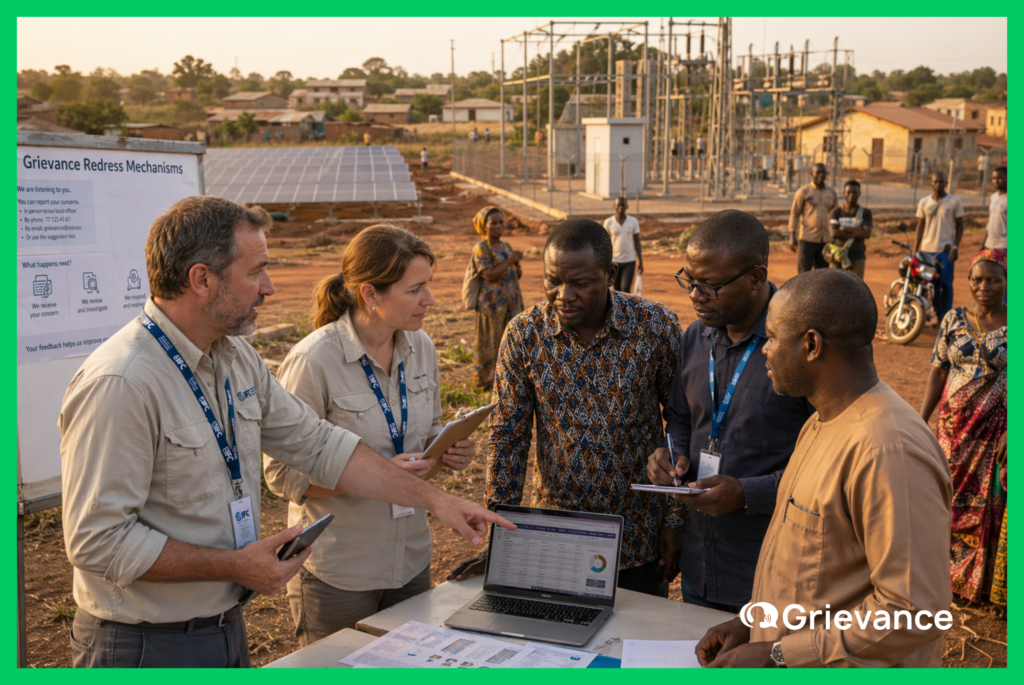
Grievance Redress Mechanisms Transform Community Participation and Engagement
Most development projects have a grievance redress mechanism somewhere in their documentation. On paper, it exists. In practice, communities rarely use it. The complaint box sits empty, the hotline goes unanswered, and tensions build silently until they erupt into protests or project delays. The gap between having a grievance redress mechanism and having one that actually works is enormous.
Digital grievance redress mechanisms close that gap. They replace dusty suggestion boxes with mobile apps, web forms, SMS channels, and toll-free hotlines that meet people where they already are. They give complainants a ticket number, a timeline, and real-time status updates. They make the entire process visible, trackable, and accountable.
The result? Communities participate. Not because they are told to, but because they see the system responding. When a farmer texts a complaint about a damaged access road and receives an SMS confirmation within minutes, followed by a resolution within days, that farmer tells others. Participation becomes self-reinforcing.
A grievance redress mechanism (GRM) is a structured system through which individuals or communities affected by a project can report concerns, submit complaints, and track resolutions. A digital GRM uses technology, mobile apps, web forms, SMS, and dashboards- to make this process accessible, transparent, and accountable at scale.
Why Community Participation Matters for Grievance Redress Mechanisms
No participation means no data, no early warnings, and no accountability
A grievance redress mechanism without community participation is a reporting tool for nobody. It generates no data, identifies no risks, and resolves no conflicts. Active participation changes everything.
When citizens report problems early, project teams can fix small issues before they become expensive crises. The World Bank’s Grievance Redress Service confirms the pattern: projects with functional GRMs experience fewer formal disputes and fewer implementation delays. The logic is straightforward: if people have a reliable way to flag concerns, they use it instead of escalating through political channels or media.
Digital systems amplify this effect by creating continuous feedback loops. Citizens report an issue through a mobile app. The system logs it, assigns it, and sends the complainant a confirmation. A few days later, the complainant gets an update. This cycle of report, acknowledge, resolve, and follow up builds a habit of engagement. People come back because the system has proved it works.
There is also a data dimension. Every grievance logged in a digital system becomes a data point. When project managers see that 40% of complaints in a specific district relate to water access, they can reallocate resources proactively. This kind of responsiveness signals to communities that their input shapes decisions, which in turn drives more participation.
Paper-based systems cannot build feedback loops. They lack timestamps, automated routing, and status tracking. Digital grievance redress mechanisms create an auditable chain from complaint to resolution, and that visibility is what turns one-time complainants into regular participants.
Inclusive Channels That Reach Every Stakeholder
Accessibility is the first test of a credible complaint system
A grievance redress mechanism is only as effective as its most excluded user. If the system requires internet access and literacy, it will miss the people who need it most: rural populations, elderly citizens, women in conservative settings, and people with disabilities.
Digital GRM platforms solve this by operating across multiple channels simultaneously. A single complaint management system can accept grievances through a web portal, a mobile app, an SMS shortcode, a toll-free phone line, and even in-person kiosks at health clinics or government offices. All of these channels feed into one unified database. The complaint submitted by SMS and the one submitted through the web portal land in the same queue, receive the same tracking number, and follow the same resolution workflow.
Multilingual Access
Grievance.app supports forms in over 100 languages, including French, Arabic, Swahili, Hausa, Wolof, and more. When complainants describe problems in their own language, data quality improves and the emotional barrier to participation drops.
Anonymous Reporting
Fear of retaliation is the single most common reason people do not file complaints. Digital platforms that allow anonymous submissions see higher volumes and more honest feedback, particularly on corruption, gender-based violence, or staff misconduct.
Multichannel Intake
All channels feed into one unified database. A complaint submitted by SMS and one submitted through the web portal land in the same queue, receive the same tracking number, and follow the same resolution workflow.
Community Touchpoints
Trained volunteers equipped with tablets collect grievances during market days, health clinic visits, or community meetings. These intermediaries extend the system’s reach without requiring every citizen to own a smartphone.
Need a GRM platform that supports 100+ languages, anonymous reporting, and multichannel intake out of the box? Grievance App centralises complaints from web, mobile, SMS, and phone into one dashboard with real-time tracking and automated workflows.
Transparency and Trust: The Engine of Sustained Engagement
Trust predicts repeat use more than any other factor
Trust is not a soft metric. It is the single strongest predictor of whether a community will use a grievance redress mechanism repeatedly.
Digital platforms build trust through visibility. When a complainant submits a grievance, they receive an immediate acknowledgement with a unique case number. They can check their case status at any time through SMS, the app, or a web dashboard. They see when the case was assigned, to whom, and what the expected resolution date is. This level of transparency transforms complaint handling from a black box into a visible process.
Features That Drive Engagement in Digital GRM Platforms
Technology choices directly affect whether people will use the system
The technology behind a digital grievance redress mechanism matters because it directly affects adoption. Clunky interfaces, slow load times, or confusing forms kill participation. Modern GRM platforms are designed with the end user in mind.
Mobile-first design is non-negotiable. According to Statista, around 74% of web traffic in Africa comes from mobile phones. A GRM platform that works poorly on a phone will not get used. Grievance.app is built for mobile from the ground up, with responsive forms that load quickly on low-bandwidth connections and work offline when network coverage drops.
| Capability | Traditional GRM | Digital GRM Platform |
|---|---|---|
| Case tracking | Paper logs, no status visibility | Real-time dashboards with SMS alerts |
| Routing | Manual handoffs, complaints about wrong desks | Automated routing by rules and category |
| Language support | National language only | 100+ languages, including local dialects |
| Escalation | Depends on individual staff initiative | Automated escalation with deadline triggers |
| Analytics | Quarterly manual review of logs | Live filtering by type, location, date, and status |
| Data security | Physical files, limited access control | Role-based access, audit logs, and compliance |
Organisations using Grievance.app have reported resolution rates above 99% for priority cases. The automated workflow, from intake to routing to escalation to resolution, keeps cases moving and prevents complaints from falling through the cracks.
Real-World Impact: Case Studies from the Field
Proven results from digital GRM deployments across Africa
Theory is one thing. Results are another.
Across these examples, the pattern is consistent. Digital grievance redress mechanisms increase participation because they deliver results that communities can see.
Strategies to Maximise Community Participation
Technology alone does not guarantee uptake
Organisations that achieve high participation rates do several things deliberately. The platform matters, but so do the outreach, the partnerships, and the visible follow-through on resolved cases.
What makes digital grievance redress mechanisms drive community participation
Every unheard grievance is a missed opportunity. Start hearing them all.
Grievance App helps development projects centralise stakeholder complaints, automate workflows, and produce audit-ready reports, in 100+ languages, on any device.
Frequently Asked Questions
Common questions about digital grievance redress mechanisms and community participation.
What is community participation in grievance redress mechanisms? +
Community participation means that affected populations actively use the GRM to report concerns, track case progress, and provide feedback on outcomes. High participation requires accessible channels (phone, app, SMS), local language support, anonymous reporting options, and visible evidence that complaints lead to action. When these conditions are met, the GRM becomes a genuine two-way communication tool between project implementers and the communities they serve.
How do digital grievance redress mechanisms improve stakeholder engagement? +
Digital platforms remove the friction that kills engagement in traditional systems. Citizens can file a grievance in their own language at any time, receive instant confirmation, and track progress through SMS or a dashboard. Automated workflows ensure cases are routed and resolved quickly. When stakeholders see fast, transparent responses, they trust the system and use it again, creating a cycle of engagement that paper-based mechanisms cannot replicate.
What features should a digital GRM platform include? +
An effective digital GRM platform needs multichannel intake (web, mobile, SMS, phone), anonymous and confidential reporting, multilingual forms, automated case routing and escalation, real-time dashboards, analytics and reporting, and strong data security with role-based access control. Mobile-first design is essential for regions where smartphones are the primary internet access point. Customisable forms ensure the platform adapts to the specific project context.
Why is transparency important for GRM participation? +
Transparency converts one-time complainants into regular participants. When people see that their case was received, assigned, and resolved within a defined timeframe, they trust the process. Public dashboards, anonymised case statistics, and published resolution timelines reinforce this trust at the community level. Without transparency, grievance mechanisms feel like a formality, and participation collapses.
How can organisations encourage more communities to use their GRM? +
Run awareness campaigns through local radio, community events, and trusted intermediaries. Offer the GRM in local languages and through multiple channels, including SMS and WhatsApp. Guarantee anonymity and follow through visibly on resolved cases. Train community volunteers to help people file complaints. Publish success stories. Ask users for feedback on the process and act on it. The combination of proactive outreach, accessible technology, and demonstrated results drives sustained participation.