
Safeguards Grievance Redress Mechanism: Key to Effective Project Oversight and Compliance
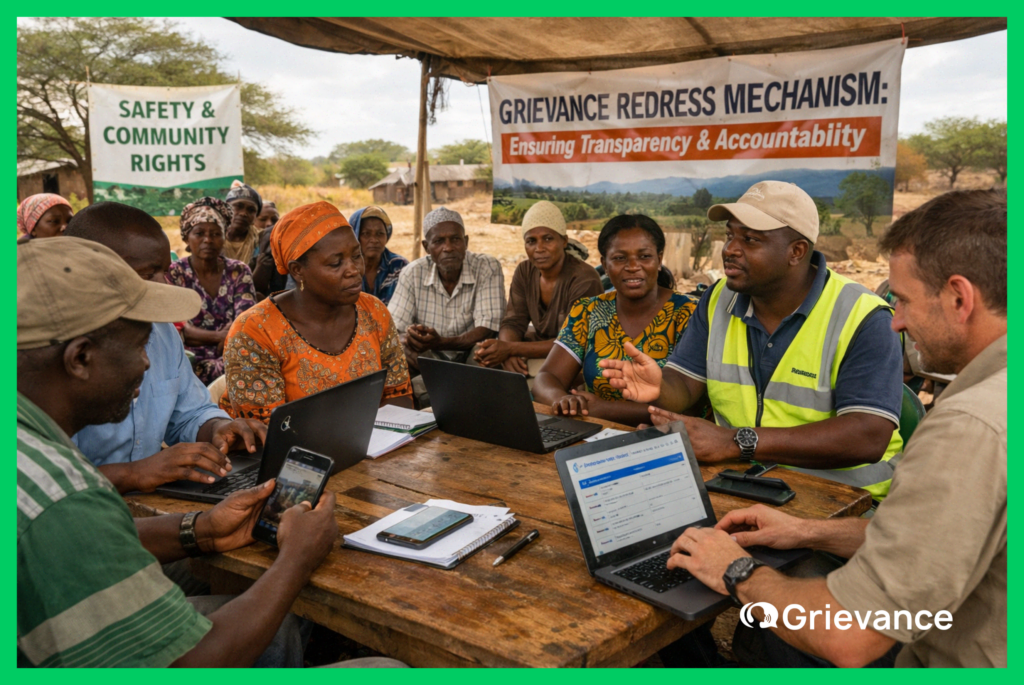
In donor-funded projects and government programs, safeguards grievance redress mechanism may sound like just another compliance checkbox. Yet overlooking it can lead to serious consequences: community complaints festering into protests, costly delays, or even project suspension. Safeguards supervision, the monitoring of environmental and social standards in projects, depends heavily on having a formal grievance mechanism in place.
Why? Because a well-implemented GRM (Grievance Redress Mechanism) is the frontline tool that ensures every stakeholder concern is heard and resolved. It turns diffuse complaints into actionable feedback, helping project teams catch issues early and demonstrate accountability.
International donors now insist on effective GRMs in their oversight; the World Bank, for example, “mandates effective GRMs in all projects with significant environmental or social impacts”. In short, a strong safeguards grievance mechanism isn’t just bureaucracy; it’s critical for project oversight, compliance, and the credibility of any initiative. This article explores why robust grievance redress mechanisms are indispensable for supervision missions and audits, and how they drive transparency, risk management, and stakeholder trust.
How a Safeguards Grievance Redress Mechanism Strengthens Project Oversight
An effective safeguards grievance redress mechanism serves as an early-warning and oversight system for projects. It provides supervisors and monitoring teams with real-time visibility into issues on the ground. Every complaint lodged by a community member or stakeholder is a data point about project performance. By logging and tracking these grievances, oversight officials can see patterns and react quickly. For example, if multiple complaints emerge about dust pollution on a construction site, the supervision team can intervene before a small nuisance becomes a regulatory violation or a media scandal.
In this way, the GRM acts as a risk management tool that flags problems for corrective action. Leading institutions consider GRMs a core part of good governance and project risk mitigation; unresolved grievances that are ignored often escalate into protests, delays, or even violence. A well-designed GRM nips disputes in the bud by capturing and resolving issues promptly, turning potential conflicts into opportunities for dialogue.
The result is stronger project oversight: supervisors are never “in the dark” about stakeholder concerns, and they can ensure that project implementers respond before issues spiral out of control. In essence, the grievance mechanism becomes the eyes and ears of safeguards supervision on the ground, continuously feeding back information that helps keep the project on track.
Compliance and Accountability: Donor Requirements for GRMs
For organizations overseeing projects, compliance with donor and regulatory standards is non-negotiable. Grievance mechanisms play a direct role in meeting these obligations. Major international donors like the World Bank, UNDP, and regional development banks now require formal grievance redress systems as part of their environmental and social safeguards frameworks.
Under the World Bank’s Environmental and Social Framework, for instance, every significant project must establish a grievance mechanism to handle concerns of affected communities. This is not just paperwork; it’s about demonstrating accountability. By implementing a GRM, project teams show they take stakeholder feedback seriously and have processes to address complaints in a timely, fair manner. This helps fulfill funding conditions and avoid penalties or funding withdrawal.
As the World Bank itself notes, such mechanisms “provide project-affected parties with redress and help address issues at an early stage”. In practical terms, having a safeguards grievance redress mechanism gives oversight bodies tangible evidence that the project is listening to its stakeholders and managing risks. It also aligns the project with global best practices and safeguard policies. When auditors or donor representatives conduct supervision missions, a functioning GRM allows them to easily review how many grievances were received and resolved, and whether responses met required timelines.
In fact, a digital GRM can generate instant reports for project auditors or donor reviews, with clear data for World Bank supervisors to verify compliance with grievance management requirements. Simply put, GRM = Compliance: it ensures your project not only says it values transparency and accountability, but can prove it with documented grievance logs and outcomes.
Preventing Conflict and Building Stakeholder Trust
One of the most critical reasons to have a grievance mechanism is conflict prevention. Safeguards supervision isn’t only about ticking boxes; it’s about maintaining positive relationships with the communities a project affects. If people have no trusted channel to voice complaints, small issues can boil over into major conflicts. For example, a minor compensation delay or an unaddressed environmental concern might spark public anger if left unacknowledged.
A grievance redress mechanism provides a safe outlet for frustrations and a structured path to solutions. By addressing minor grievances early, projects prevent them from snowballing into serious disputes. A common adage in project management is that a grievance resolved today is one less protest or lawsuit tomorrow. Indeed, GRMs have been shown to defuse tensions that could derail projects by offering a peaceful avenue for redress. This early resolution of issues keeps projects on schedule and on budget, a major benefit for oversight teams concerned with performance.
Equally important, a transparent grievance process actively builds stakeholder trust. When community members see that there is an open door to raise concerns, and that those concerns are met with prompt, fair action, it greatly improves their perception of the project. Each resolved complaint is an opportunity to demonstrate respect and responsiveness. Over time, this fosters goodwill and a sense of partnership between the project implementers and the community.
In contrast, secrecy or inaction erodes credibility. A well-run GRM shows that the project values stakeholder input, which boosts legitimacy and the “social license” to operate. Many governments and companies have learned that grievance redressal and conflict resolution systems are indispensable for sustaining public support. In short, effective grievance redress mechanisms both prevent conflicts and prove to stakeholders that the project is worthy of their trust. (For more on how GRMs help prevent disputes and build trust, see our article on grievance redressal conflict resolution on this blog.)
Data-Driven Supervision and Continuous Improvement
Beyond resolving individual complaints, grievance mechanisms generate valuable data that can improve project management and oversight. Every grievance logged into the system comes with details: what issue was reported, where, by whom, and how it was resolved. Aggregating this information allows safeguard supervisors to spot trends and systemic issues. For example, if many grievances relate to a particular contractor’s work or a specific region, it signals a hotspot that needs attention.
By analyzing patterns in the complaints, management can address root causes, whether it’s adjusting a policy, increasing community outreach, or tightening a contractor’s performance requirements. In this way, a GRM becomes a feedback loop for continuous improvement. Rather than treating grievances as isolated nuisances, forward-thinking teams treat them as free intelligence on what could be improved.
This data-driven approach greatly enhances project oversight. Supervisors can use grievance dashboards and reports to identify where safeguard measures might be failing and proactively correct course. Modern grievance platforms often include analytics that break down cases by category, severity, resolution time, etc. These insights make supervision more targeted and effective; you know exactly which issues are most prevalent and whether responses are timely.
Importantly, the data also helps in communication with stakeholders and donors. Projects can demonstrate transparently how they are performing on grievance handling: e.g., “95% of complaints resolved within 30 days” or “top three issues this quarter were related to resettlement.” Reporting such metrics during safeguards supervision missions shows a commitment to accountability and learning. It turns the GRM into more than a passive log; it becomes an active management tool for oversight and adaptive management. Ultimately, projects with robust grievance tracking tend to achieve better outcomes because they continually learn from stakeholder feedback and adjust accordingly.
Leveraging Digital Tools for Efficient GRM and Compliance
Implementing a grievance mechanism on paper or through ad-hoc channels can be challenging to manage. That’s where digital grievance redress platforms come in. Modern GRM software solutions (such as Grievance App) transform the complaint handling process, making it far more streamlined, transparent, and easy to supervise. Digital GRM tools allow all grievances to be captured in one centralized system, accessible in real time by both project staff and oversight teams.
This centralization is a game-changer for safeguards supervision. It ensures nothing falls through the cracks, every issue is timestamped, assigned, and tracked through to resolution. Project supervisors can log into a dashboard at any time and see the status of all outstanding grievances, response times, and actions taken. Automated alerts ensure that if a case isn’t addressed within the set timeframe, it gets escalated to higher management. This level of automation and visibility drastically reduces the chance of negligence or delay.
Digital platforms also excel at accessibility and inclusion, which are key for compliance with safeguard standards. They offer multichannel intake, via web portal, mobile app, SMS, hotline, etc., so that all stakeholders can easily submit complaints. Features like anonymous reporting and multilingual support lower barriers for vulnerable groups to speak up. By expanding access, a digital GRM increases uptake of the mechanism, which is crucial for fulfilling the donor mandate that grievance systems be accessible to all project-affected people.
Additionally, a good GRM platform comes with enterprise-grade security and privacy controls (encryption, user access roles, audit trails) to protect sensitive information. This is vital for building trust and meeting data protection laws. Notably, leading solutions can be configured to meet international standards such as the World Bank’s ESS10 and IFC Performance Standards.
For instance, Grievance App is designed to comply fully with World Bank safeguard requirements, so projects using it automatically align with donor compliance expectations. The software provides custom forms to capture all information needed for World Bank reporting, automatic time-stamping of every action for auditability, and built-in compliance checks. By adopting a digital grievance platform, project teams make it easier to do the right thing: every complaint is handled consistently and documented, and oversight bodies can verify performance at a glance. In summary, digital GRM tools turn grievance redress into an efficient, transparent process, one that not only satisfies compliance but also genuinely improves responsiveness and stakeholder engagement.
Conclusion: Strengthening Safeguards Supervision with GRMs
Grievance redress mechanisms have emerged as indispensable tools for effective safeguards supervision. They ensure that no stakeholder concern goes unheard, thereby upholding the transparency, accountability, and inclusiveness that donors and communities expect. From preventing conflicts to demonstrating compliance, a robust safeguards grievance redress mechanism keeps projects on the right side of both public opinion and regulatory standards.
It transforms oversight from a periodic check-the-box exercise into an ongoing dialogue with those the project impacts. In today’s world of heightened scrutiny, ignoring grievances is simply not an option, and forward-looking agencies know that a strong GRM is their best defense against reputational risks and safeguard failures.
If you’re overseeing a project and want to bolster your safeguards supervision, consider modernizing your grievance mechanism. Need help getting started? The team behind Grievance App is here to support your journey. Our innovative platform has been adopted by governments, international donors, NGOs, and companies to handle GRMs at scale, ensuring every complaint is logged, tracked, and resolved in line with global best practices. Request your free demo today to discover how Grievance App’s robust digital GRM solution can be tailored to your needs.
See firsthand how features like multichannel intake, smart case routing, real-time dashboards, and analytics can streamline complaint management while ensuring compliance with standards like ESS10. By investing in a proven solution, you can accelerate implementation and immediately strengthen your project’s grievance handling capacity. Every voice matters, and with the right grievance system in place, every voice will be heard and resolved. Take the next step toward better oversight and accountability by modernizing your GRM, and your stakeholders (and your donors) will thank you for it.
FAQ: Safeguards Grievance Mechanism & Project Oversight
What is a Safeguards Grievance Redress Mechanism?
A Safeguards Grievance Redress Mechanism is a formal process for receiving and resolving complaints in projects that have environmental or social impacts. It provides an official channel where stakeholders (community members, workers, etc.) can lodge grievances and get timely remedies. In practice, a safeguards GRM involves clear steps: multiple intake channels for complaints, a registration and tracking system, set timelines for investigation and response, and an escalation process if issues aren’t resolved. The goal is to ensure any concern related to project safeguards (like land acquisition, environmental nuisance, compensation, labor conditions) is heard and addressed transparently.
How does a grievance mechanism enhance project oversight?
A grievance mechanism enhances project oversight by acting as an ongoing monitoring tool for project issues. It gives oversight teams (project supervisors, auditors, donor representatives) direct insight into what problems stakeholders are encountering. Rather than waiting for periodic reports, supervisors can see live data on complaints, essentially a real-time barometer of social and environmental performance. This allows them to intervene early when a pattern of complaints indicates a deeper problem, improving risk management. Additionally, because every grievance and its resolution are documented, oversight bodies can audit how responsive the project is to community concerns.