
Project Grievance Mechanism: The Key to Conflict-Free Infrastructure Projects
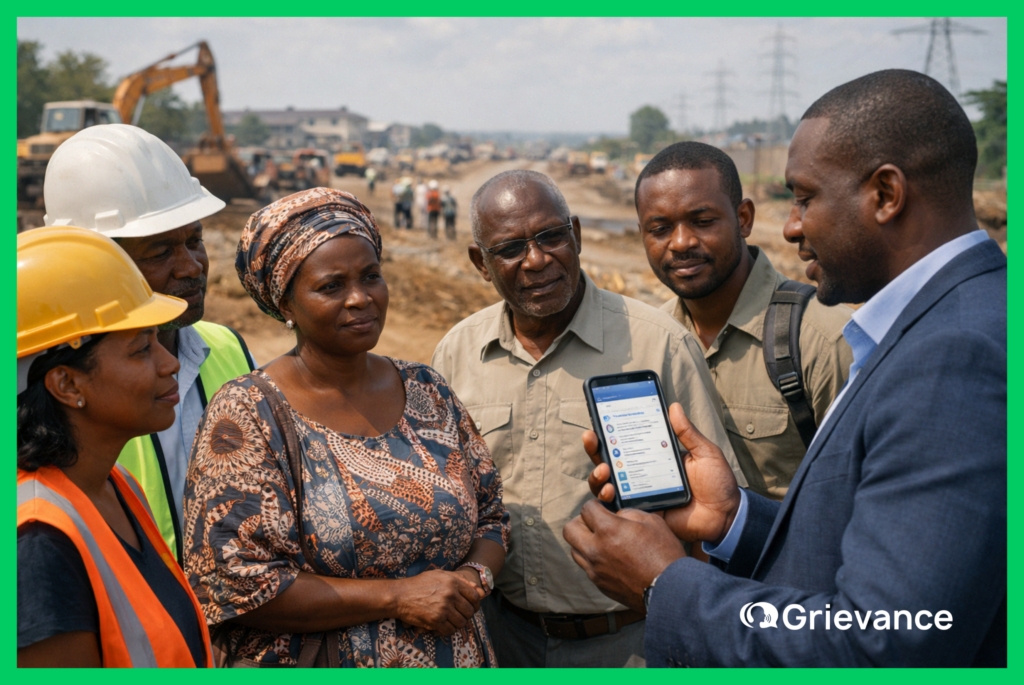
Public infrastructure projects, whether building highways, power lines, or urban facilities, often stir strong reactions from local communities. Noise, land acquisition, environmental concerns, or compensation issues can quickly spark discontent if left unaddressed. Without a proper project grievance mechanism, minor complaints may fester into full-blown conflicts that delay or derail projects.
In Africa and around the world, we’ve seen protests erupt over infrastructure works where people felt ignored. The result? Costly work stoppages, damaged trust, and sometimes project cancellations. This is why implementing a robust grievance redress system isn’t just bureaucratic red tape; it’s a strategic necessity.
A Project Grievance Mechanism (often called a Grievance Redress Mechanism, or GRM) provides an official channel for stakeholders to voice concerns and get them resolved transparently. By proactively managing infrastructure complaints, project leaders can prevent conflicts, keep construction on schedule, and maintain credibility with communities and funders. In the following sections, we’ll explore what a project GRM entails, why it’s essential for public infrastructure projects, key components of an effective system, and real-world examples (from energy to transport to urban planning) illustrating how GRMs make a difference. Let’s dive in and see how turning complaints into solutions can save your project from conflicts and costly delays.
What Is a Project Grievance Mechanism?
A project grievance mechanism is a structured process for receiving, addressing, and resolving complaints from people affected by a project. In simple terms, it is an official complaint-handling system that infrastructure project teams put in place so that community members, workers, or other stakeholders can raise issues and get timely responses. Unlike informal channels (e.g., complaining to a site manager or on social media), a GRM is formal, transparent, and trackable. Every grievance, whether it’s about construction dust, noise, land compensation, or worker misconduct, is logged and followed through via a clear procedure.
In practice, when someone has a concern about a project, the grievance mechanism allows them to submit a complaint (anonymously if needed) through defined channels. The project team then investigates and takes action to resolve it, and finally communicates the outcome back to the complainant. This closed-loop process ensures no issue is ignored. Rather than letting frustrations simmer, the GRM creates a dialogue: stakeholders see that their feedback is heard, and project managers get a chance to fix problems before they escalate. Essentially, the project grievance mechanism acts as a safety valve, converting potential conflicts into constructive feedback and solutions.
Why Infrastructure Projects Need a Robust Project Grievance Mechanism
Public infrastructure initiatives, roads, bridges, power plants, and urban redevelopment are high-stakes endeavours often situated in communities’ backyards. Here’s why a robust project grievance mechanism is vital to their success:
- Preventing Conflicts and Delays: A well-functioning GRM can stop disputes before they start. By capturing grievances early and addressing them, project teams defuse tensions that might otherwise erupt into protests or lawsuits. Studies confirm that unresolved complaints frequently lead to work stoppages and even project cancellations. For example, research on 200 infrastructure projects found 36 projects were cancelled due to community conflicts, 162 experienced significant delays, and 116 had cost overruns, many stemming from unresolved grievances. Clearly, ignoring community complaints comes at a huge cost. On the flip side, when people see their concerns handled through a proper channel, it averts anger from boiling over into public opposition. In short, a grievance mechanism is cheap insurance against expensive conflict.
- Enhancing Transparency and Trust: Implementing a formal grievance process signals accountability. It shows the government or contractor is not hiding problems under the rug but rather addressing them openly. Each complaint is tracked and responded to, building community trust that the project is responsive. Transparency is especially crucial in African countries where communities may historically mistrust large projects. A GRM demonstrates good faith; every voice matters. Authorities that listen and act on feedback earn credibility and a “social license” to operate. Conversely, if citizens file complaints and never hear back, they lose faith in the system. A robust GRM thus becomes a cornerstone of stakeholder trust and cooperation.
- Meeting Donor and Regulatory Requirements: Today’s funding agencies and regulators mandate effective grievance redress as part of project governance. For instance, the World Bank Group requires all projects with significant environmental or social impacts to have a functioning GRM, as outlined in its Environmental and Social Standard 10 (ESS10) on Stakeholder Engagement. Likewise, the African Development Bank and other development partners insist on grievance mechanisms as a condition for project approval. Failing to have one can jeopardise financing or violate local laws. In essence, a project grievance mechanism is not just best practice; it’s often a compliance obligation. Aligning with these international standards avoids sanctions and shows funders that you take accountability seriously.
- Improving Project Outcomes: Grievances aren’t just complaints; they’re feedback. An effective GRM can highlight recurring problems or community suggestions that project managers might otherwise miss. Perhaps multiple residents complain about a dangerous intersection near a road project; that’s a cue to add safety measures. Or if many people voice concerns about resettlement compensation, the team can adjust its approach. By analysing grievance data, project leaders can spot trends and fix underlying issues, leading to better project design and service delivery. This continuous feedback loop helps ensure the infrastructure truly meets local needs and avoids pitfalls. Far from being a bureaucratic burden, the GRM becomes a tool for adaptive management and learning.
In summary, a robust project grievance mechanism keeps projects on track, financially, socially, and legally. It prevents minor issues from snowballing into crises, builds public trust through transparency, satisfies donor requirements, and provides insight to improve the project. Especially in large public works that directly affect communities, a GRM is as essential as any technical risk mitigation plan for ensuring success.
Key Components of an Effective Grievance Redress Mechanism (GRM)
Not all grievance mechanisms are equally effective. To deliver real value, a project GRM must be accessible, transparent, and well-structured. The following components are essential:
- Multiple Channels for Complaints: An effective GRM provides multichannel access so all stakeholders can submit grievances easily. This includes hotlines, web portals, mobile apps, SMS, email, and in-person options. Offering multiple languages and formats, as encouraged by World Bank ESS10, ensures inclusivity and increases uptake, reducing the likelihood of protests or informal escalation.
- Clear Procedures and Timelines: Each grievance should follow a defined, standardised process. Complaints are formally registered, assigned a tracking ID, and handled within clear timelines for acknowledgement and resolution. Automated confirmations and regular updates enhance accountability, while escalation pathways ensure fairness when issues remain unresolved.
- Transparency and Case Tracking: Transparency is critical at every stage. Complainants should be able to track the status of their case in real time. Internally, all actions must be logged in a centralised system, creating a full audit trail. Dashboards and reports help project teams monitor performance and prevent cases from being overlooked.
- Inclusive and Anonymous Reporting: To encourage honest reporting, GRMs should allow anonymous or confidential submissions and protect complainants from retaliation. This is particularly important for sensitive issues such as misconduct or gender-based violence. International best practices emphasise safeguarding vulnerable groups and ensuring safe reporting channels.
- Structured Review and Resolution: Clear roles and workflows are essential. Grievances are reviewed by responsible teams or a designated grievance committee, with defined escalation mechanisms when needed. Every valid complaint must result in a documented response, ensuring closure and reinforcing trust in the process.
- Monitoring, Feedback, and Learning: A strong GRM goes beyond case resolution by capturing feedback and analysing grievance trends. Reviewing recurring issues helps identify systemic risks and informs corrective actions. In this way, the GRM functions as both an early warning system and a tool for continuous project improvement.
When these elements are in place, the grievance mechanism becomes a reliable, action-oriented system aligned with international standards, transforming complaint management into a structured dialogue that benefits both communities and project implementers.
International Standards and Donor Requirements for GRMs
Grievance mechanisms are not merely internal best practices; they are firmly anchored in international standards and donor requirements. Major global institutions recognise GRMs as essential tools for safeguarding communities and ensuring project success.
- World Bank Environmental & Social Framework (ESS10): The World Bank’s ESS10 makes grievance mechanisms mandatory for all project-affected parties. Projects must provide accessible, predictable, and transparent channels for complaints and timely resolution. Effective GRMs support strong stakeholder engagement, reduce social risks, help prevent protests and delays, and enable systematic documentation of issues for Bank supervision.
- IFC Performance Standards: The International Finance Corporation (IFC) requires grievance mechanisms under Performance Standard 1 and related sector standards. GRMs must be proportionate to project risks and are considered a core element of stakeholder engagement. They enable early identification and resolution of community concerns and are a condition for meeting IFC environmental and social performance requirements.
- Regional Development Banks and Donors: Institutions such as the African Development Bank (AfDB), Asian Development Bank, UN agencies, and bilateral donors also mandate grievance mechanisms for funded projects. AfDB safeguard policies require formal systems to address stakeholder complaints, particularly in infrastructure and resettlement projects. Many donors also provide independent escalation channels, reinforcing the importance of effective project-level GRMs.
- United Nations and ESG Frameworks: Global frameworks like the UN Guiding Principles on Business and Human Rights emphasise access to remedy, including grievance mechanisms, as a pillar of responsible governance. At the same time, ESG standards increasingly require organisations to demonstrate how community grievances are managed, making GRMs a key factor in investor and stakeholder confidence.
In summary, robust GRMs are embedded in international best practices and are often a prerequisite for funding and regulatory approval. Aligning projects with these standards strengthens accountability, enhances credibility, and supports both local acceptance and international legitimacy.
Case Study: Digital GRM Success in Sierra Leone’s Energy Sector
To see a project grievance mechanism in action, consider the example of Sierra Leone’s Electricity Distribution and Supply Authority (EDSA), the national power utility. EDSA undertook major energy infrastructure upgrades (with World Bank support) to expand and improve electricity access. Recognising the potential for community grievances (from construction disturbances, new power lines, etc.), the project launched an innovative digital GRM platform to handle complaints.
This GRM digital platform, implemented via Grievance App in 2023, provided multiple channels for customers and residents to lodge complaints, including a web portal, mobile app, toll-free hotline, and even SMS. Every grievance received a unique tracking number and was routed to the appropriate team at EDSA for resolution. The system sent automatic acknowledgements and allowed complainants to check status updates in real time.
The impact was impressive: EDSA radically improved its complaint handling efficiency and community satisfaction. According to project reports, the digital GRM led to increased transparency, significantly reduced processing times for resolving issues, and real-time tracking and reporting of each case. Customers felt their voices were finally being heard. For EDSA, the data dashboards helped identify common issues (like frequent power outages in certain areas or billing problems) so they could proactively address them. This not only resolved individual complaints but also guided service improvements.
Crucially, the grievance mechanism helped EDSA avoid conflicts that often plague infrastructure efforts. With a formal channel in place, aggrieved community members had no need to resort to street protests or political pressure; they could get solutions through the system. As a result, project implementation stayed on track, and EDSA earned praise for its accountability. In fact, this Sierra Leone GRM has become a model for other African infrastructure projects. It demonstrated how a digital grievance redress platform can transform stakeholder relationships: turning a previously opaque complaint process into a smart, secure, and transparent system.
For governments and utilities elsewhere, the EDSA case is instructive. A modern GRM (especially using dedicated software like Grievance App) can handle high complaint volumes efficiently, ensure no issue is lost, and build public trust, all critical for large infrastructure projects. As one Sierra Leone official noted, the platform set a new benchmark for public accountability in the energy sector, inspiring other agencies to follow suit.
GRM in Transport Projects: Addressing Community Complaints to Keep Projects on Track
Infrastructure in the transport sector, such as road expansions, bridges, railways, and ports, often has a widespread community impact. Land may need to be acquired, construction might disrupt traffic and livelihoods, and environmental side effects (dust, noise, vibration) can affect nearby residents. These projects, therefore, generate a lot of community feedback and complaints. Establishing a strong grievance mechanism in transport projects is crucial to address these concerns and prevent work disruptions.
Consider a highway construction project in an African country: without a GRM, villagers along the route might have no formal way to report issues like cracks in their houses from blasting, or delays in receiving compensation for land. Frustrated, they could block the road in protest or take the issue to court, halting construction for months. We’ve seen such scenarios play out in various countries. However, with a GRM in place, there is an alternative: community members can directly contact the project’s grievance office or hotline to lodge their complaint. The project can then investigate (e.g. send engineers to assess building damage, or check the status of compensation payments) and provide a remedy or explanation. This early dialogue can defuse tensions before they escalate. As noted earlier, even small complaints about dust or noise, if ignored, can quickly become “front-page controversies” in the media. A GRM offers a peaceful avenue to resolve such issues, reducing the likelihood of people resorting to protests or external whistleblowing.
A real-world example comes from a resettlement in a highway project: Families relocated for a new road in West Africa were concerned about the promised amenities at the resettlement site (water supply, school access, etc.). Through the project’s grievance mechanism, they filed their complaints. The project team was able to engage with them, clarify timelines, and expedite some support, averting what could have become a public relations crisis. The GRM process brought transparency to a sensitive issue and gave the community confidence that the developers would fulfil their commitments. Ultimately, the road construction proceeded without major delays, and trust with the local population improved.
Key to success in transport project GRMs is speed and fairness. Many transport grievances are time-sensitive (e.g. a blocked driveway due to road works needs quick action). A digital GRM can help by instantly alerting project managers to new complaints and tracking response deadlines. Also, involving local community liaisons or committees in the grievance process can add credibility, as people feel their neighbours have a voice in the resolution. For instance, some projects form Grievance Redress Committees, including community reps, elders, or NGOs, to jointly review complaints and advise on solutions. This inclusive approach increases acceptance of outcomes.
In summary, transport infrastructure projects benefit immensely from GRMs. They channel community complaints into an organised system, allowing project teams to fix problems before they stall the project. By keeping open lines of communication, GRMs help keep construction on schedule and within budget, avoiding the costly domino effects of unresolved disputes (contractor downtime, legal fees, redesign costs). For any road or transport initiative that cuts through populated areas, a grievance mechanism is now considered a must-have tool for risk management and community engagement.
GRM in Urban Planning: The RUSLP Example in Sierra Leone
Urban development projects, such as city infrastructure upgrades, housing programs, and municipal service improvements, also strongly benefit from grievance redress mechanisms. In urban settings, projects affect diverse stakeholders and complex systems, making structured feedback channels essential. A strong example comes from urban planning in Sierra Leone.
The Resilient Urban Sierra Leone Project (RUSLP), funded by the World Bank, aimed to improve urban management and services across several cities, including Freetown. Given its wide scope, RUSLP implemented a digital GRM powered by Grievance App to capture and manage citizen feedback efficiently.
Residents could submit complaints or suggestions through a mobile app, toll-free hotline, or online portal, in multiple languages. Issues ranged from waste management and drainage to market construction. Dedicated city council staff reviewed submissions, ensured quick acknowledgement (often within 48 hours), and resolved cases within defined timelines.
The results were clear: faster resolutions, improved trust, and greater transparency. Citizens saw their concerns addressed, fostering inclusion and confidence in urban decision-making. The GRM also helped project teams identify recurring problem areas, enabling proactive intervention before issues escalated.
According to project reports, the RUSLP GRM became a core element of stakeholder engagement and was recognised by the World Bank as a successful model for digital citizen engagement in urban projects. By project completion, hundreds of grievances had been resolved, contributing to higher public satisfaction and reduced tension between residents and authorities.
For governments and city planners, the lesson is clear: urban projects require formal grievance mechanisms as much as rural ones. In fast-moving urban environments, a GRM helps manage feedback transparently, prevent reputational risks, and demonstrate accountability.
The RUSLP experience shows that even in low-resource contexts, a well-designed digital GRM can strengthen community participation, build trust, and support inclusive urban development, ensuring cities are shaped with their communities, not merely for them.
Conclusion: Embracing GRMs for Conflict-Free Project Delivery
Public infrastructure projects thrive when they have the community’s buy-in and trust, and that is exactly what a robust project grievance mechanism cultivates. From the examples and best practices above, it’s evident that grievance redress mechanisms are not mere formalities; they are lifelines for project sustainability. By giving stakeholders a voice and addressing concerns promptly, a project can dramatically reduce conflicts, avoid costly delays, and improve its outcomes. Governments and organisations that embrace GRMs send a powerful message that they are accountable, transparent, and committed to inclusive development.
In the African context and globally, more and more agencies are integrating digital GRMs into their project toolkit and seeing the benefits in smoother implementation and stronger community relations. It’s no coincidence that major donors now insist on these systems: they know a good GRM can make the difference between a project that stalls and one that succeeds.
As you plan your next infrastructure initiative, consider this: Are you prepared to handle the complaints and feedback that will come your way? Ignoring them is not an option, but handling them efficiently is a proven path to success. This is where modern solutions like Grievance App shine. Grievance App is a cutting-edge platform that streamlines the entire grievance process, from intake to resolution, in line with international standards (including World Bank ESS10 compliance). It offers an interactive, secure interface for stakeholders to submit issues and for project teams to manage cases with ease, ensuring no grievance goes unanswered.
Don’t wait for small issues to snowball into project crises. It’s far more effective (and cheaper) to resolve complaints early and transparently. By adopting a strong project grievance mechanism now, you invest in your project’s resilience and reputation.
Ready to strengthen your project’s grievance handling and foster community trust? Take the next step towards conflict-free project delivery, request your free demo of Grievance App today and discover how a digital GRM can transform the way you manage infrastructure complaints.
FAQ: Project Grievance Mechanisms & Infrastructure Complaints
Q: What is a project grievance mechanism in infrastructure projects?
A: It’s a formal complaint and redress system set up for a specific project, allowing people affected by the project (community members, workers, etc.) to voice concerns and get resolutions. In infrastructure projects, a grievance mechanism provides a structured process, people can submit complaints (e.g. about construction impacts, compensation, safety issues), the project team logs and investigates each issue, and then responds with a solution or explanation. Unlike ad-hoc complaints, a project GRM is transparent and trackable, ensuring every valid grievance is addressed in a timely, fair way.
Q: Why are grievance mechanisms important for public infrastructure projects?
A: Large infrastructure projects often affect many stakeholders, which can lead to infrastructure complaints, for example, noise, dust, land acquisition disputes, or service disruptions. A grievance mechanism is crucial because it helps manage these issues before they escalate. It provides an early warning system: project managers learn about problems directly from the community and can fix them, preventing conflicts and delays. Moreover, a GRM builds trust by showing the project’s commitment to transparency and accountability. Essentially, it keeps the project running smoothly by resolving small issues now to avoid big crises later.