
Grievance Mechanism Best Practices: 12 Lessons That Separate Working GRMs from Paper Exercises
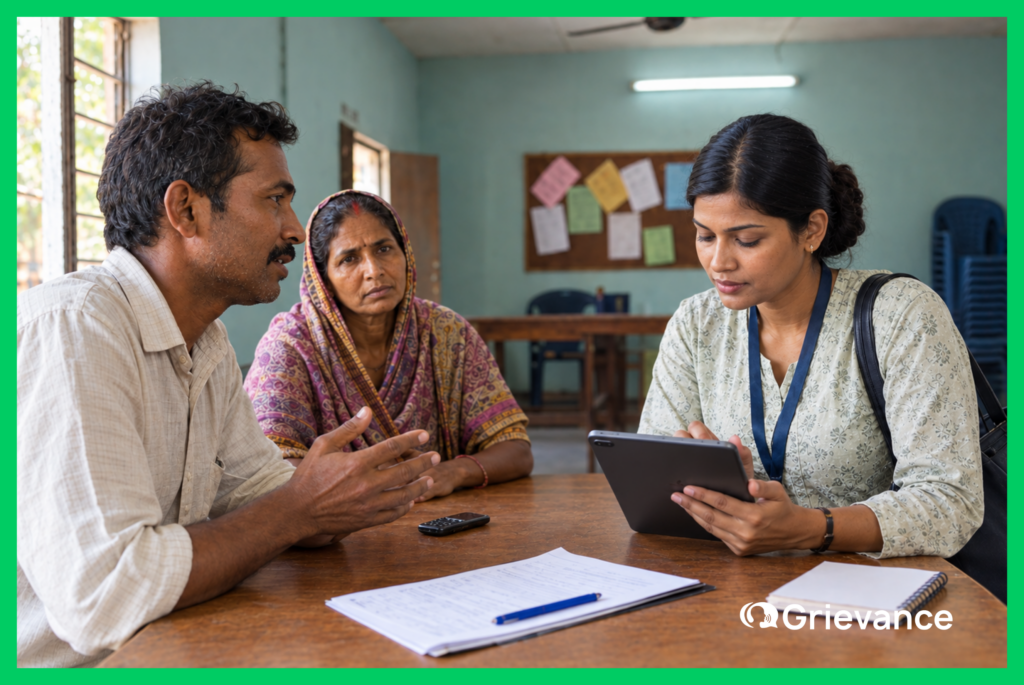
Grievance Mechanism Best Practices
A World Bank Independent Evaluation Group review found that 58% of grievance redress mechanisms in development projects fail to resolve complaints at the local level. More than half. That number reflects a pattern every safeguards team recognizes: GRMs designed on paper that collapse on contact with communities.
The gap between a compliant grievance mechanism and an effective one is operational. It sits in intake channel selection, SLA calibration, escalation logic, and the hundred small design decisions that determine whether a farmer with a land dispute actually gets a response.
This article distills 12 grievance mechanism best practices drawn from 50+ real project deployments across infrastructure, extractive, humanitarian, and governance programs. Each lesson comes from what worked in the field, not from what reads well in a policy manual.
Quick Definition
A grievance mechanism is a structured process through which individuals or communities affected by a project can raise complaints, receive a response, and seek resolution. In practice, it means a system with defined intake channels, assigned handlers, response timelines, escalation paths, and closure criteria.
The IFC Performance Standards and World Bank Environmental and Social Standard 10 (ESS10) both require project-level GRMs. So do the Equator Principles. The question is never whether you need one. It is whether yours works.
Intake and Accessibility: Get This Wrong and Nothing Else Matters
Lessons 1–3: Multichannel intake, language localization, anonymous reporting
A grievance mechanism with a single intake channel filters out the people who need it most. A toll-free phone line excludes communities with limited mobile network coverage. A web portal excludes populations with low digital literacy. A physical suggestion box excludes anyone who fears being seen filing a complaint.
Multichannel Intake
One digital (SMS, WhatsApp, or web form), one in-person (community liaison or field office), and one anonymous (sealed drop box or hotline). No single channel should account for more than 60% of total intake. If it does, the other channels are failing.
Language Localization
Translation is not localization. “My crops were damaged” is a complaint category. “Environmental and social impact claim” is not. Projects that localize report 40-70% higher intake volumes in the first six months.
Anonymous Reporting
Submit without identification, track status without revealing identity, receive resolution without appearing in person. The absence of sensitive complaints in your GRM log is not evidence they don’t exist. It is evidence the mechanism is not trusted.
Without genuine anonymity, complaints about gender-based violence, corruption, and retaliation never surface. A tracking number or reference code issued at submission, accessible through a channel the complainant chooses, is the minimum infrastructure for trust.
SLAs, Escalation, and Routing: The Operational Engine
Lessons 4–6: Tiered response timelines, predefined escalation trees, category-based assignment
A 90-day resolution window is a policy artifact. It tells the community nothing useful and gives handlers no operational pressure. Best practice is a tiered SLA structure where each tier triggers an automatic notification to the complainant and missed SLAs generate alerts to supervisors.
The mechanism loses credibility the moment a complaint sits unanswered for weeks with no communication. An effective grievance mechanism framework defines escalation paths before the first complaint arrives, not after the first dispute stalls.
| Level | Handler | Authority | Max Duration |
|---|---|---|---|
| Level 1 | Field officer / Community liaison | Direct resolution, compensation up to threshold | 15 days |
| Level 2 | Project manager / Safeguards lead | Mediation, revised compensation, policy exception | 30 days |
| Level 3 | Senior management / Ombudsman | Binding decision, independent review referral | 45 days |
Projects without defined escalation paths see complaints loop between handlers. The complainant gets passed around. Trust erodes. The mechanism becomes a filing system, not a resolution system.
Complaint routing should follow category logic, not convenience. Environmental complaints go to the environmental officer. Resettlement complaints go to the resettlement team. Labor grievances go to the HR or labor relations focal point. Automated routing, where complaints are assigned based on predefined category rules, eliminates manual triage bottlenecks and creates accountability: the handler assigned to a category owns that category’s resolution rate.
Need automated SLA tracking, escalation alerts, and category-based routing across your entire GRM? Grievance App handles all three with configurable rules, automatic notifications, and real-time dashboards.
Quality, Feedback, and Independence: The Trust Infrastructure
Lessons 7–9: Metrics beyond closure counts, proactive communication, operational independence
Most GRM dashboards report two numbers: complaints received, and complaints closed. Neither tells you whether the mechanism is working. A high closure rate with a high reopen rate signals premature closure. Handlers are marking complaints resolved without actually resolving them. That pattern shows up clearly in data, but only if you track reopens.
Quality Metrics
Five metrics that matter: resolution rate, average time to first response, average time to resolution by category, reopened complaint rate, and post-resolution satisfaction scores. Track all five or you’re flying blind.
Feedback Loop
Three communications minimum: acknowledgment of receipt, status update during processing, and resolution notification with outcome and appeal options. Each goes through the channel the complainant prefers. Proactive communication builds trust. Silence destroys it.
Independence
When community relations manages the GRM, inconvenient complaints get downgraded. The GRM focal point reports to the project director or safeguards lead, not to the communications manager. Dashboards show real numbers. Trend analysis surfaces recurring issues even when they are politically uncomfortable.
Filing a complaint into silence is worse than having no mechanism at all. It teaches the community that the GRM is performative. The projects with the highest community trust are the ones that communicate proactively, not just reactively.
Infrastructure, Integration, and Continuous Improvement
Lessons 10–12: Offline-first design, GRM data in project decisions, quarterly adaptation cycles
A cloud-based GRM platform that requires stable internet connectivity is useless in the field conditions where most project-affected communities live. Offline-first design means field officers can register complaints, update case files, and record resolution actions on a tablet or mobile device without connectivity. Data syncs automatically when a connection becomes available. No complaints are lost because a cell tower was down.
Complaint data is operational intelligence. A spike in water-quality complaints near a construction site is an early warning. A cluster of labor grievances from the same subcontractor is a compliance signal. A pattern of resettlement complaints in one district means the resettlement action plan has gaps.
A grievance tracking system that cannot operate offline will fail in exactly the environments where it is needed most. The IFC Performance Standards and the World Bank ESF both expect adaptive management of grievance mechanisms. Continuous improvement is not a bonus. It is the standard.
In Summary: Key Takeaways
12 operational patterns that separate working GRMs from paper exercises
For Safeguards Teams, Project Managers & ESG Consultants
Build a grievance mechanism that resolves complaints, not just records them.
Grievance App delivers multichannel intake, automated routing, SLA management, escalation alerts, and audit-ready reporting across your entire GRM.
Frequently Asked Questions
Answers to the most common questions about grievance mechanism best practices and operational design.
How many intake channels should a grievance mechanism have? +
A minimum of three: one digital (SMS, WhatsApp, or web), one in-person (field office or community liaison), and one anonymous (sealed box or hotline). The right mix depends on the community’s communication patterns, literacy levels, and connectivity. No single channel should handle more than 60% of total intake.
What SLA timelines work best for grievance redress mechanisms? +
A four-tier structure is standard across effective deployments: 48-hour acknowledgment, 5-day triage and assignment, 15-day first substantive response, 30-day resolution or escalation decision. Each tier includes automatic notifications to the complainant and supervisor alerts on missed deadlines. IFC Performance Standard 1 requires mechanisms to operate within known and reasonable timeframes.
How do you measure whether a grievance mechanism is effective? +
Track five metrics: resolution rate, average time to first response, average time to resolution by category, reopened complaint rate, and post-resolution satisfaction scores. A high closure rate paired with a high reopen rate signals that complaints are being closed without real resolution. See our guide on complaint management KPIs for implementation details.
What is the difference between a grievance mechanism and a complaints box? +
A complaints box is a single intake channel with no defined process behind it. A grievance mechanism is a complete system: multiple intake channels, assigned handlers, defined timelines, escalation paths, feedback loops to the complainant, and data reporting to project management. The box collects complaints. The mechanism resolves them.
Which international standards require a project-level grievance mechanism? +
World Bank ESS10, IFC Performance Standard 1, the Equator Principles, the UN Guiding Principles on Business and Human Rights, and the EU Corporate Sustainability Due Diligence Directive (CSDDD) all require or recommend operational-level grievance mechanisms for projects affecting communities.