
Why a Digital Grievance Redress Mechanism – GRM is Essential for Modern Development Projects
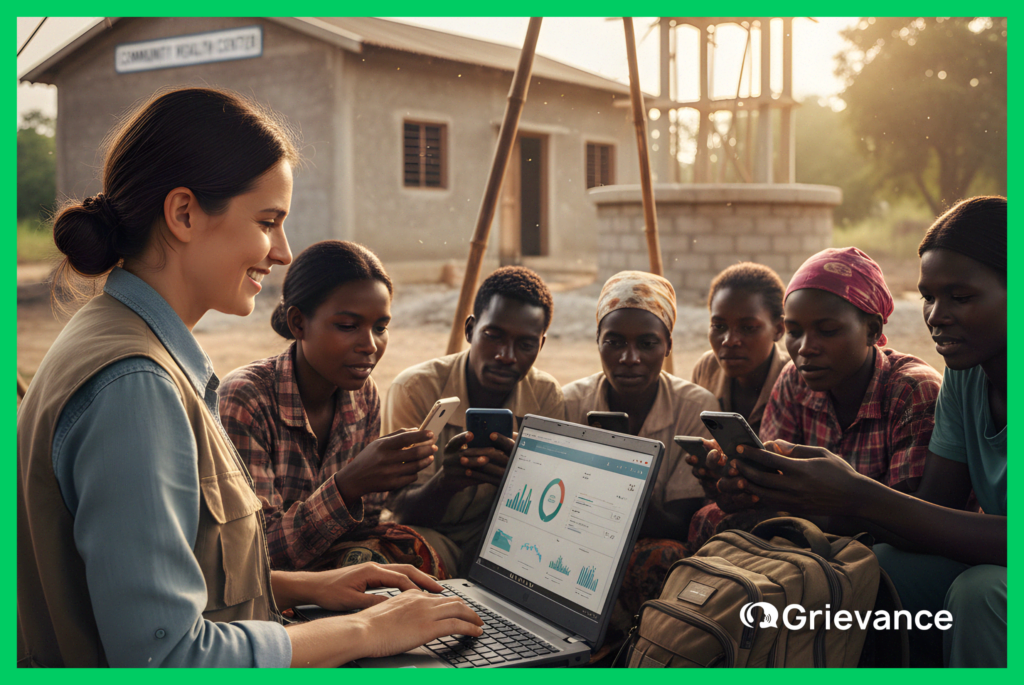
In today’s development projects, whether led by governments, NGOs, or multilateral agencies, stakeholder concerns can make or break success. Communities and citizens demand transparency, accountability, and quick resolution of grievances, not just paper forms or suggestion boxes. A Grievance Redress Mechanism – GRM provides a structured, official process for people to submit complaints and receive remedies. When implemented digitally, a GRM becomes even more powerful: it offers real-time tracking, multilingual access, secure anonymity options, and data analytics, all of which strengthen trust and compliance. Without a modern digital GRM, small issues (dust, noise, service delays) can fester into protests, delays, or lost funding.
A Digital GRM centralizes every complaint on an online platform. For affected communities, from villagers in infrastructure projects to citizens in urban programs, it provides an easy channel to be heard. For project managers and funders, it provides documented proof of responsiveness and performance. In fact, as one guide notes, strong grievance mechanisms can “help address problems proactively as they arise, before they erode the local community’s trust”. In short, a digital GRM is not a bureaucratic luxury but a strategic pillar: it boosts accountability and trust, mitigates risks early, and ensures projects meet international standards (World Bank ESS10, IFC Performance Standards, UNGP, etc.).
This article explores why modern development initiatives need a digital GRM, what features make it effective, and how platforms like Grievance App deliver a compliant, user-friendly solution.
Strategic Role of a Digital Grievance Redress Mechanism – GRM
A GRM acts as a formal bridge between project authorities and affected stakeholders. It converts grievances into constructive feedback and conflict-prevention. Strong GRMs offer “efficient, immediate, and low-cost” problem solving. Key strategic benefits include:
- Building Trust and Transparency. When stakeholders see that complaints are acknowledged and addressed, their confidence grows. An accessible digital platform (web, mobile, SMS) that provides real-time case updates shows “public proof that you take every concern seriously”. This transparency reduces suspicion and rumor, demonstrating the project’s commitment to honest engagement.
- Preventing Escalation and Costs. Even minor grievances can derail projects if ignored. An effective GRM catches issues early. As Grievance App’s analysis notes, every complaint resolved today is “one less crisis (and expense) tomorrow”. Delaying a GRM can halt work, incur legal fees, or trigger protests. In contrast, rapid digital handling of small issues prevents costly delays and reputational damage.
- Continuous Improvement. By aggregating data on complaints, digital GRMs turn grievances into actionable insights. Patterns (e.g., repeated service gaps) emerge from case logs, allowing managers to adjust policies or training. This feedback loop means projects can evolve responsively. Over time, grievance data helps improve service delivery and stakeholder satisfaction.
Overall, a digital GRM signals that an organization is accountable and responsive. It aligns with good governance: as one expert puts it, GRMs let “communities report concerns… improve trust and mitigate conflict risks”. In short, a digital grievance mechanism is a strategic asset, essential for any modern development project that aims for lasting impact.
Key Benefits of an Online Complaint Resolution System
Modern digital GRMs bring advantages far beyond traditional paper or hotline systems. By leveraging technology, they satisfy stakeholder expectations in the digital age. Important benefits include:
- Multichannel Accessibility: Users can submit grievances via web portals, mobile apps, SMS, or even integrated hotlines. This inclusivity is critical; it “ensures equitable access across all stakeholder groups”, eliminating financial, linguistic, or physical barriers. For example, Grievance App offers web and mobile submission (with anonymity) so that even hesitant or remote users can report issues.
- Real-Time Tracking & Alerts: The moment a complaint is logged, the system timestamps and routes it. Stakeholders receive instant acknowledgment (“Your complaint has been received”) and can follow its status online. Automated notifications alert both users and staff about updates or escalations. This constant visibility “builds trust and ensures all parties are informed throughout the process”. In essence, no grievance is ever “lost in a pile”; everyone knows where it stands.
- Structured Workflow: Digital platforms enforce a standardized process. Each case is auto-categorized by type or urgency, then routed to the right department or officer. Predetermined timelines and reminders keep resolution on track. Advanced systems even use AI to suggest past-case resolutions or standard responses. The result: faster, more consistent outcomes. As one review notes, built-in workflows mean staff “spend less time triaging and more time solving problems”.
- Audit Trail and Data: Every interaction (submission, update, comment) is logged in an immutable history. This creates an auditable record for managers and donors, a key compliance requirement. Performance dashboards and analytics reveal trends (e.g., recurring issues with a contractor) and measure response times. In effect, the GRM doubles as an early-warning and reporting system for project leadership.
Together, these features transform grievance handling from reactive chaos into a proactive, data-driven process. Organizations gain efficiency (no more chasing emails or paper) while demonstrating accountability. The transparency alone often suffices to calm many issues before resolution.
Ensuring Compliance with a Digital GRM
A digital grievance platform also ensures compliance with international standards and donor requirements. Leading guidance makes GRMs mandatory in many contexts. For example, World Bank’s ESS10 (Stakeholder Engagement) explicitly calls for “an accessible and inclusive” grievance mechanism that provides parties with redress. Similarly, the IFC’s Performance Standards require projects to establish a grievance process “for affected communities”, scaled to project risks, to enable early identification and remedy of issues. Many donors (World Bank, UN, EU, regional development banks) now mandate an effective grievance redress channel as a condition of funding.
In practice, this means development projects must have a transparent complaint system. A digital GRM meets these rules by design: it is fully documented, audit-friendly, and operable from day one. For example, World Bank projects require that GRMs be in place before appraisal, and digital tools make that rollout faster. Non-compliance can even risk funding or sanctions. By contrast, a modern GRM platform automatically generates the reports donors need, complaint logs, resolution timelines, demographic accessibility, satisfying donors and auditors alike.
In sum, a digital GRM is not only a best practice but often a formal requirement. It aligns with Environmental, Social & Governance (ESG) criteria and the UN Guiding Principles on Business and Human Rights, which consider operational grievance channels a key part of “Remedy”. Organizations that implement GRMs demonstrate proactive risk management and adherence to global norms, boosting their credibility.
Core Features of an Effective Grievance Platform
To deliver these benefits, a GRM platform needs the right features. An all-in-one digital solution typically includes:
- Anonymous and Multilingual Submission: Complainants can report issues confidentially and in their preferred language. Anonymity options encourage reporting sensitive issues (e.g., corruption or GBV) without fear. Grievance App, for instance, offers anonymous entry and supports multiple languages, ensuring no voice is excluded.
- Intuitive User Interface: The platform should be easy for anyone to use, whether on a smartphone or a community computer center. A clear web form, with quick access and 24/7 availability, maximizes engagement. Tools often include predefined templates and guidance, so users can submit structured complaints (e.g., drop-down categories).
- Automated Routing & Escalation: Once submitted, grievances are automatically assigned based on criteria (issue type, location, severity). Automated escalation rules ensure that if an issue is not resolved in time, higher-level managers are alerted. This systematic approach prevents tasks from falling through the cracks and speeds up response times.
- Real-Time Monitoring Dashboard: Managers have a centralized dashboard showing open cases, overdue items, and key metrics. Live graphs and filters help spot problem areas. Every case update or action is recorded. As one reviewer notes, such dashboards give “live status updates” and “comprehensive tracking” that enhance accountability.
- Rich Analytics and Reporting: Built-in analytics track response times, resolution rates, and complaint volumes by category. These insights let leaders evaluate performance and report to stakeholders. For example, custom reports can prove to funders that the GRM is meeting its Service Level Agreements. This data-driven oversight is something only a digital GRM can provide.
Finally, robust security and compliance are built in: role-based access controls, encryption of data at rest and in transit, and audit logs comply with international norms (e.g., GDPR, ISO). Overall, the right digital features make the GRM accessible, efficient, and trustworthy.
Grievance App: A Unified Digital GRM Solution
To achieve all of the above, institutions increasingly turn to purpose-built platforms like Grievance App. Grievance App is an integrated, all-in-one solution designed specifically for high-impact projects. It’s already trusted by top organizations (EU Commission, World Bank, African Development Bank, UNDP, etc.), evidence of its credibility. Key aspects include:
- User-Friendly Interface: Stakeholders can submit complaints with one click. The web form is simple and mobile-optimized, with anonymity and quick email confirmations built in. This encourages adoption: whether a farmer in the field or an urban resident, anyone can file a grievance easily.
- Intelligent Case Management: Incoming complaints are instantly routed to the right officer, with automatic alerts and reminders for deadlines. Each complaint can be tagged, merged with related cases, or escalated per project rules. Admins see every step documented, so responses are consistent and traceable.
- Real-Time Analytics and Reports: The platform’s dashboard provides leaders with live statistics, graphs of incoming complaints by type, resolution times, and team performance. These analytics enable data-driven management. Grievance App even offers customizable KPI reports, so projects can easily demonstrate responsiveness to donors.
- Scalability and Integration: Grievance App supports multiple projects and languages simultaneously. It can integrate via API with other systems (HR, public portals). This means large government agencies or multilingual NGOs can plug it into their existing workflows without friction.
Under the hood, Grievance App ensures full compliance: it is aligned with World Bank ESS10 and IFC standards. The platform’s audit trails and exportable templates (Acknowledgment letters, Terms of Reference, etc.) support institutional transparency. In short, Grievance App embodies the best practices described here, offering a turnkey GRM that builds trust, protects reputations, and keeps projects on track.
Request your free demo. Experience how our digital Grievance Redress Mechanism can transform your project’s accountability and stakeholder engagement.
FAQ – Digital Grievance Redress Mechanism – GRM
Q1: What is a Grievance Redress Mechanism – GRM?
A GRM is a formal process for collecting, reviewing, and resolving complaints from stakeholders (citizens, workers, communities) in a timely and fair manner. It provides clear steps, submission, investigation, resolution, and feedback so that concerns about a project or service are addressed rather than ignored.
Q2: Why use a digital GRM instead of a manual system?
A digital GRM dramatically improves speed, transparency, and scale. Unlike paper or hotlines, an online platform offers real-time tracking, automated notifications, audit logs, and data analytics. Stakeholders instantly see their complaint status; managers get alerts and dashboards. These features are impossible with manual methods. In short, digital tools turn grievance handling into an efficient, accountable process.
Q3: What are the key benefits of an online grievance platform?
Key benefits include multichannel accessibility (web, mobile, SMS submissions), anonymity options for vulnerable users, and case management workflows that enforce deadlines and escalations. Other advantages are automatic report generation for compliance, analytics that reveal trends, and faster resolution times. Ultimately, a digital GRM builds stakeholder trust, improves project outcomes, and saves time for staff.
Q4: Do donor-funded projects require a GRM?
Yes. Major donors like the World Bank, UN agencies, and regional development banks often mandate a grievance mechanism in funded projects. For example, the World Bank’s ESS10 and IFC standards require a project-level GRM. Having a robust GRM (preferably digital) is typically a condition for approval and ongoing monitoring. It ensures transparency and can be crucial for securing and maintaining funding.
Q5: How does a GRM enhance compliance and transparency?
A GRM ensures every complaint is logged and tracked, creating an audit trail. This satisfies legal and ethical standards (like WB ESS10, IFC PS, UNGPs) because it demonstrates the project’s commitment to remedying issues. Digital platforms also facilitate public reporting (e.g., summary of resolved cases) and integration with environmental/social audits. In this way, online GRMs embed accountability into the project’s fabric and build credibility with regulators and communities.