
From Paper to Platform: How Grievance App Transforms Stakeholder Complaint Management
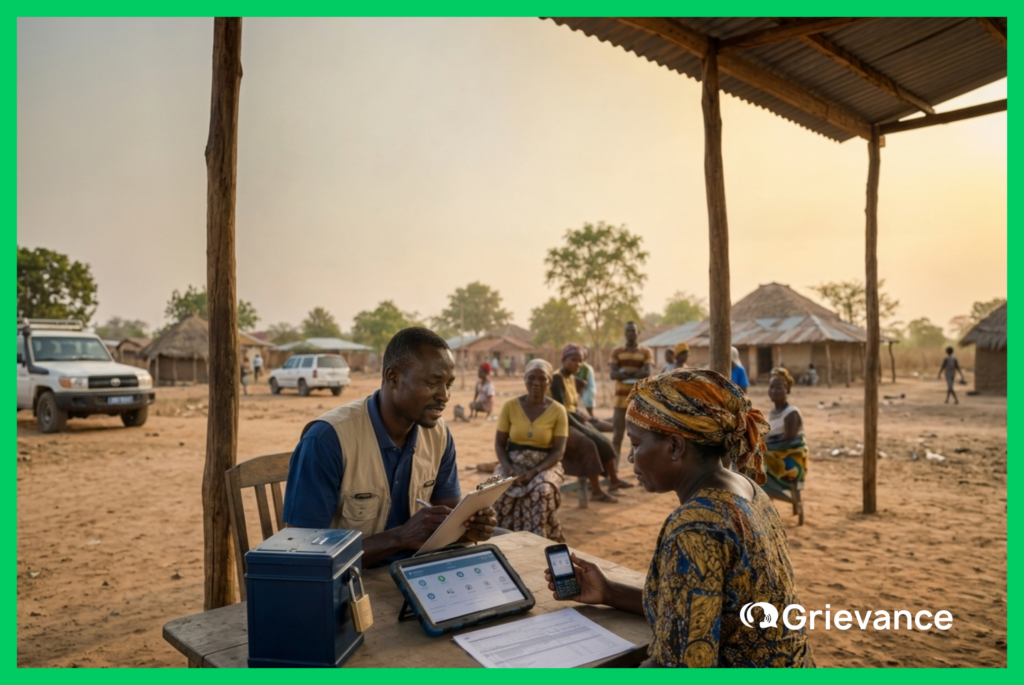
Grievance App Transforms Stakeholder Complaint Management
Research on 200 infrastructure projects found that 36 were cancelled due to community conflicts, 162 experienced significant delays, and 116 had cost overruns, many stemming from unresolved grievances. Paper forms and suggestion boxes didn’t prevent any of it. Communities and stakeholders demand swift, visible action on their complaints. Forms that vanish into filing cabinets don’t qualify.
Traditional manual processes are slow and opaque. Issues slip through the cracks. Trust erodes. Projects stall. An effective grievance redress mechanism (GRM) changes that equation by showing stakeholders their voices matter.
Grievance App moves complaint management from paper to a platform. It digitizes the entire grievance process, from intake to resolution, so every concern is recorded, tracked in real time, and resolved transparently. The result: faster resolution, fairer treatment, and the kind of operational transparency that builds trust with communities, donors, and oversight bodies alike.
Quick Definition
A complaint tracking system is a digital platform that captures, routes, monitors, and resolves stakeholder grievances across the full case lifecycle. It replaces paper logs, email chains, and spreadsheets with a centralized workflow where every complaint has a status, an owner, a deadline, and an audit trail.
The Pitfalls of Paper: Why Traditional Complaint Handling Falls Short
Four failure modes that paper-based systems cannot fix
Organizations that rely on paper forms, ledger entries, or ad-hoc emails to handle complaints face structural challenges that no amount of goodwill can overcome.
Failure Mode
Physical forms and manual routing cause delays in acknowledging and addressing complaints. Urgent issues can languish for weeks before reaching the right person.
Failure Mode
Stakeholders have no way to check the status of their complaint. Submissions disappear into a black box, leaving people wondering if anything is being done.
Failure Mode
Manual processes typically require in-person submissions or phone calls during office hours. This excludes remote, busy, or vulnerable community members, reducing overall feedback.
Failure Mode
Paper files are easily lost or misfiled, and there is no centralized database to spot recurring issues. Organizations cannot analyze complaint trends or extract lessons to prevent future conflicts.
When grievances go unaddressed or are severely delayed, stakeholder confidence collapses. As the IFC’s Good Practice Note on Grievance Mechanisms warns, strong grievance mechanisms help address problems proactively as they arise, before they erode community trust. Without that mechanism, small issues fester into protests, legal action, and project cancellations.
Enter the Digital Era: How a Complaint Tracking System Changes Everything
Five operational shifts that eliminate paper bottlenecks
Moving from a manual process to a digital complaint tracking system eliminates the bottlenecks of paper and introduces speed, visibility, and accountability at every step.
Grievance App: Streamlining Complaint Management Through Digital Innovation
A turnkey platform designed for the full grievance lifecycle
Grievance App is a turnkey solution that exemplifies the power of a digital GRM platform. Designed as a specialized stakeholder complaint tracking system, it streamlines every phase of grievance handling: submission, tracking, resolution, and reporting, in one user-friendly interface.
Multi-Channel Intake
Stakeholders submit complaints through the channel that works for them, in multiple languages and anonymously if needed. Every submission is automatically timestamped for a complete audit trail.
Real-Time Monitoring
Each case is tracked on a central dashboard where staff see new complaints and status updates instantly. Automatic notifications and reminders ensure no issue misses its response deadline.
Automated Workflow
Each complaint is sent to the appropriate department based on category or severity. If an issue isn’t resolved on time, it’s flagged to higher management automatically, enforcing accountability.
Collaborative Resolution
Multiple departments coordinate on complex cases by sharing notes, files, and standardized response templates. AI-driven suggestions based on past cases help resolve issues faster.
Security & Compliance
Grievance App meets international standards for data protection and donor transparency. Role-based access, data encryption, and full audit logs keep information secure and confidential.
Customization & Integration
Fully customizable branding, forms, and categories. Multiple languages and accessibility options (screen readers, high contrast). API integration with project management, CRM, or M&E systems.
Still running your GRM on paper or spreadsheets? Grievance App replaces months of custom development with pre-built routing, SLA alerts, multi-channel intake, and lender-ready dashboards.
Driving Transparency and Good Governance with Grievance App
Compliance, auditability, and trust in one platform
In a digital grievance system, every complaint and action is recorded. Supervisors and funders can monitor how many issues have been received, how quickly they are resolved, and whether proper procedures are followed, all through the platform’s reports. This level of transparency enforces good governance internally and demonstrates accountability to external stakeholders.
For governments and international agencies, such visibility is non-negotiable. Many donors now mandate having an effective grievance mechanism in place for funded projects. The World Bank’s Environmental and Social Standard 10 (ESS10) explicitly requires project implementers to establish an accessible and inclusive grievance mechanism for stakeholders. The IFC’s Performance Standards call for companies to have a complaint process for affected communities that is scaled to the risks and adverse impacts of the project.
| Dimension | Paper-Based GRM | Digital GRM (Grievance App) |
|---|---|---|
| Acknowledgement time | Days to weeks | Instant, automated |
| Status visibility | None (black box) | Real-time dashboard |
| Audit trail | Incomplete or lost | 100% logged, timestamped |
| Intake channels | In-person, office hours only | Web, mobile, SMS, 24/7 |
| Trend analysis | Not possible | Automated pattern detection |
With every step timestamped and auditable, a digital GRM leaves little room for mishandling complaints. Grievance App provides a live demonstration of governance in action: each case is handled in a fair, transparent manner that anyone, including auditors, can verify.
Transparency has a direct impact on public trust. When people see an open channel where complaints are acknowledged and resolved, confidence in the institution grows. Grievances addressed early and openly are far less likely to escalate into disputes or public criticism. Secretive or paper-based processes breed suspicion. By illuminating the complaint handling process, Grievance App helps restore and maintain trust between project implementers and the community.
Empowering Stakeholders through a Citizen Feedback Platform
From passive recipients to active participants
Beyond efficiency and compliance, a digital citizen feedback platform like Grievance App changes the relationship with stakeholders. It sends a clear message: we are listening. Unlike impersonal drop boxes or bureaucratic paperwork, an interactive platform engages users directly. Citizens can voice their concerns or suggestions easily, at any time and from anywhere, and know they will get a response.
Inclusivity is at the core. The platform’s multilingual and anonymous submission options ensure that even marginalized voices can be heard without fear of retribution. As the CAO’s Grievance Mechanism Toolkit emphasizes, a well-functioning grievance mechanism provides an opportunity for redress and for the organization and community to work together to find solutions and develop better relationships.
By lowering barriers to entry, the system dramatically increases the volume and diversity of feedback. This open feedback culture means small problems are resolved before they escalate, and teams stay attuned to community sentiment. Stakeholders see their input leading to action, which builds goodwill and a sense of shared ownership.
A literature review by the Accountability Research Center found that GRMs contribute to avoiding project delays, stopping harmful practices, and building community trust in public institutions. In an age where public opinion can make or break a project, having an engaged citizen feedback platform is a strategic advantage, not a nice-to-have.
In Summary: Key Takeaways
Paper-based complaint handling is a liability. A digital GRM is a strategic asset.
For Project Directors, Safeguards Officers & M&E Teams
Don’t let critical feedback slip through the cracks.
Grievance App digitizes your entire complaint lifecycle with multi-channel intake, automated routing, SLA tracking, and lender-ready dashboards. Live in two weeks.
Frequently Asked Questions
Common questions about transitioning from paper-based complaint management to a digital GRM platform.
Why use a digital complaint tracking system instead of paper forms or suggestion boxes? +
Digital systems dramatically improve speed and transparency. Stakeholders get instant confirmation that their complaint is received and can monitor its progress, which is impossible with paper. Automated workflows prevent delays by routing issues to the right people and sending reminders. A digital grievance redress mechanism ensures no complaint gets lost, while paper-based methods are slow, inefficient, and prone to oversights.
How do digital grievance platforms improve transparency and governance? +
By creating a detailed, auditable record for every grievance, a digital platform makes the process transparent and accountable. Managers can ensure policies are followed, and outside stakeholders see a fair process, boosting trust. Such a system also helps meet donor requirements for open complaint channels (including World Bank ESS10 and IFC Performance Standards) and catches problems early before they escalate.
What is a citizen feedback platform, and why is it important? +
A citizen feedback platform is an interactive system that enables the public to give input, lodge complaints, or offer suggestions about projects and services. It fosters two-way communication between an organization and the community. By using a platform like Grievance App, organizations demonstrate they value stakeholder opinions and are committed to transparency, leading to greater public engagement, better services, and higher trust. In development projects, such platforms ensure that even vulnerable or remote community members can voice concerns and be heard in the decision-making process.