
Use Case: Grievance Redress Mechanism Nigeria – How a Digital GRM Can Reduce Community Conflict in Infrastructure Projects
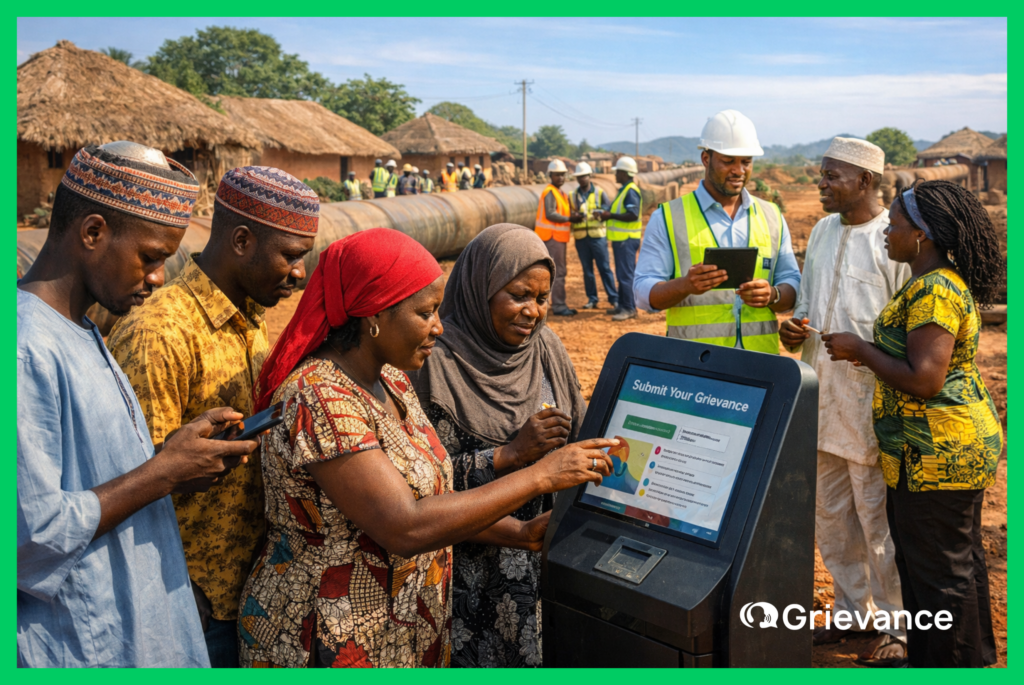
In Nigeria, large infrastructure and energy projects often trigger community tensions. Complaints about land acquisition, environmental damage, unpaid compensation, or broken promises can quickly escalate into protests or work stoppages. For example, an oil-producing community in Anambra State shut down 12 wells in early 2026 over long‐standing neglect and pollution. In Rivers State, hundreds of Ogoni protesters recently demanded suspension of resumed oil exploration because their communities “were yet to be restored” and had no formal way to raise grievances.
These cases show that Grievance Redress Mechanisms (GRMs) are not just bureaucratic routines; they are lifelines that can capture concerns early, before frustration boils over. A robust Grievance Redress Mechanism Nigeria provides communities with a credible channel to voice issues and get timely responses, transforming potential conflict into dialogue.
Nigeria’s Grievance App platform (pictured above) offers a digital grievance management system that connects community members and project authorities. By enabling 24/7, anonymous, and multilingual submissions via web or mobile, digital GRMs ensure no complaint slips through the cracks.
Each case is timestamped and tracked on a live dashboard, so stakeholders see real-time updates and know that issues are being addressed. This transparency builds trust: when communities see their concerns logged and resolved, they are far less likely to resort to protests or litigation. In short, a Grievance Redress Mechanism Nigeria, especially a digital one, shifts grievances from the streets into a structured process, nipping conflicts in the bud.
Community Grievances in Nigeria’s Infrastructure Projects
Large-scale projects in Nigeria’s oil, gas, and transport sectors routinely affect host communities. Common grievances include land disputes and resettlement (where people lose farmland or property), environmental and health impacts (oil spills, gas flares, pollution), and broken promises on jobs or infrastructure. When these issues go unanswered, they breed mistrust.
Key drivers of conflict include:
- Land & Compensation: Delays or low compensation for acquired land often spark community outrage.
- Environmental Damage: Gas flaring or oil spills can devastate crops and health, as seen in the Niger Delta.
- Unmet Development Commitments: Promises of hospitals, schools, or roads that never materialize leave locals feeling exploited.
- Lack of Local Jobs/Opportunities: Absence of jobs or local hiring in projects breeds frustration.
If left unmanaged, these grievances have real costs. Studies show unresolved complaints “fester” and can explode into large-scale disputes. In infrastructure sectors globally, dozens of major projects have been delayed or canceled due to community conflicts. In Nigeria, the shutdown of oil wells by Ogwu Ikpele indigenes vividly illustrates the stakes. As one Ogoni leader warned, without an appropriate channel for dialogue, “crisis is imminent”.
By contrast, projects that address grievances early see far fewer disruptions. An effective grievance process gives affected parties an outlet for frustration, preventing minor issues from becoming full-blown crises. In fact, international guidelines emphasize this: the World Bank’s ESS10 on stakeholder engagement states that a good GRM “provides project-affected parties with redress and helps address issues at an early stage”.
In practice, a well-designed Grievance Redress Mechanism Nigeria builds mutual understanding. Communities that see officials listening and acting are more likely to cooperate, earning the project a stronger social license to operate.
Digital Grievance Management System for Infrastructure Projects
A digital grievance management system (digital GRM) is simply a tech-enabled platform that takes the formal complaint process online and automates it. Instead of suggestion boxes or ad-hoc phone calls, digital GRMs give stakeholders multiple modern channels (web portal, mobile app, SMS hotlines, even kiosks) to file issues at any time. This inclusivity is crucial in Nigeria’s diverse context, for example, Grievance App supports over 100 languages and even provides text-to-speech for those with limited literacy.
Key features of an effective digital GRM include:
- Multi-channel Submission: Complaints can be logged via web forms, mobile app, SMS, email, or in-person at kiosks. Grievance App, for example, allows anonymous 24/7 reporting in any language.
- Real-time Tracking & Notifications: Each case is given a unique ID and appears on a live dashboard. Complainants receive acknowledgements and status updates, while officials get automated alerts and reminders. This transparency assures everyone that “no request goes lost in the pile.”
- Structured Workflow: Complaints are tagged by category, priority, and location. Related grievances can be merged for coherent handling. Role-based access and automated escalation rules ensure prompt, coordinated responses across departments.
- Accountability & Compliance: The system logs every action (audit trail) and uses encryption to protect data. It can be set up to meet international standards, for example, Grievance App is explicitly designed to comply with World Bank ESS10 and other donor requirements.
- Analytics & Reporting: Dashboards aggregate grievance data to reveal trends. Officials can spot clusters of complaints (e.g., many about dust or compensation) and address root causes. In practice, centralized digital GRMs have enabled managers to “spot trends more quickly, turning raw complaints into actionable insights”.
These capabilities turn a GRM into an early-warning system. If a sudden surge of complaints emerges about a project’s environmental impact, the team can intervene before tensions escalate into protests. As one case study noted, timely grievance redress “defuses tensions that might otherwise lead to strikes, protests, or legal battles.” In short, a digital GRM speeds up issue resolution and makes the process equitable and transparent, factors proven to prevent disputes from spiraling out of control.
Key Benefits: Trust, Risk Reduction, and Compliance
Implementing a digital GRM like Grievance App brings concrete advantages for Nigerian infrastructure projects:
- Enhanced Public Trust: Openly logging and addressing complaints demonstrates accountability. Citizens see that each grievance is handled, rebuilding faith in project leaders. One African utility reported a dramatic jump in satisfaction when customers learned “each complaint gets logged, timestamped, and tracked”.
- Conflict Prevention: By resolving small grievances early, projects avoid costly delays. For example, a review of 200 projects found that 36 were canceled and over 150 were delayed due to community conflicts. A GRM acts as cheap insurance: capturing complaints prevents them from snowballing into strikes or litigation.
- Social License to Operate: Consistent, fair grievance handling builds legitimacy. Communities recognize that their voices matter, which increases cooperation. Research shows that resolving each complaint “improves the organization’s legitimacy” and strengthens its social license.
- Donor & Regulatory Compliance: Major funders mandate GRMs. The World Bank’s ESS10 requires all projects with social or environmental impacts to have a functioning GRM. Similarly, the African Development Bank, ECOWAS, and the EU standards expect formal complaint channels. Using a compliant platform ensures projects meet these conditions, avoiding funding delays or sanctions.
- Operational Efficiency: Digital workflows save time and paperwork. Automated reminders and templates speed up case handling. In practice, countries with digital portals have seen dramatic improvements: Morocco cut complaint resolution times from weeks to days, and Rwanda processed 200,000+ cases with an 87% closure rate by centralizing grievances. Such efficiency keeps projects on schedule and budget.
By converting feedback into actionable data, a digital GRM also feeds into continuous improvement. Repeated grievances (e.g., about resettlement plans or safety issues) highlight systemic problems to fix. This loop turns citizen criticism into project insights, improving design and community relations over the long term.
Grievance App in Action: A Use Case for Nigeria
Grievance App is a proven digital GRM platform adopted by governments, NGOs and companies across Africa. It exemplifies the above principles in Nigeria’s context. The platform offers an interactive interface for communities and officials to communicate (via smartphone, web, or even offline kiosks), ensuring accessibility. All submissions are anonymised if needed, and logged with precise timestamps for full traceability.
The tool’s intelligent workflows automatically assign cases to the right department, send reminders, and escalate overdue issues. Officials coordinate responses via a shared dashboard, ensuring consistent institutional replies. Every step is recorded for audit and public reporting. This structured process means that each grievance, whether about a road construction or an oil spill, is addressed in a timely, transparent manner.
Grievance App’s design is fully compliant with international standards (World Bank ESS10, IFC, local SLAs and privacy laws). In a Nigerian project, it can be customised with local languages, project logos, and integrated with existing IT systems. By using such a platform, project sponsors turn complaint handling from an ad-hoc chore into a systematic risk management function. Rather than being a mere formality, the GRM becomes a proactive social safeguard, flagging potential issues (e.g. a cluster of safety complaints at a gas pipeline site) and enabling preemptive action.
In practice, implementing Grievance App has delivered results. In organisations using the system, grievance resolution rates exceed 99% , and community trust rises. Project leaders gain “decision-ready data” to adapt strategies. In public sector deployments, agencies report faster response times and higher citizen satisfaction. In short, Grievance App’s digital GRM has proven to defuse tensions and foster collaboration, keeping projects moving smoothly even in sensitive environments.
Conclusion
Nigeria’s infrastructure ambitions will continue to grow, but so will the need to manage social risks. The evidence is clear: without a formal complaint channel, legitimate community grievances can derail projects and damage reputations. Conversely, a robust Grievance Redress Mechanism Nigeria, especially a digital one, is a strategic asset. It transforms reactive damage control into proactive conflict prevention, safeguarding both communities and investments.
For project managers, government agencies, or donor teams, embracing a digital GRM means more stable operations and stronger stakeholder relationships. Grievance App offers a turnkey solution: try its interactive grievance platform and see how quickly it can build trust.
Request your free demo of Grievance App’s digital complaint management system today, and make community stability part of your project’s success story.
FAQ
What is a grievance redress mechanism, and why is it important in Nigeria?
A grievance redress mechanism (GRM) is a structured process allowing community members to submit complaints about a project and receive solutions. In Nigeria, GRMs are vital because they give Nigerians a voice in major projects (oil, gas, infrastructure). By addressing concerns early, from land disputes to environmental impacts, a GRM prevents small issues from exploding into protests or work stoppages. International funders like the World Bank even require GRMs (ESS10) in funded projects, underscoring their role in accountability and conflict prevention.
How does a digital grievance management system reduce community conflict in infrastructure projects?
A digital grievance management system brings technology to the complaint process. It allows stakeholders to submit issues via mobile apps, web portals, or SMS, 24/7. The system then routes each complaint through defined workflows, sending real-time updates to both officials and complainants. This transparency and responsiveness reassure communities that their concerns are taken seriously. In Nigeria, using a digital GRM has been shown to “nip disputes in the bud” by resolving issues before they fester. Automated tracking and escalation mean nothing is ignored, which builds trust and greatly reduces the chance of clashes or protests.
What features should a digital grievance management system have for infrastructure projects?
Key features include multichannel access (web, mobile, hotlines) so all affected people can submit complaints easily. It should support multilingual, anonymous submissions to be fully inclusive. The platform needs real-time case tracking and notifications, assigning unique IDs, and showing status updates to both sides. Structured categorization (by issue type and severity) with automated escalation and reminders ensures timely action. Importantly, it must enforce security and compliance: role-based access, encryption, audit trails, and alignment with standards like World Bank ESS10. Finally, built-in analytics help managers spot patterns (e.g., many complaints about a particular site) so root problems can be fixed proactively.