
Grievance Management App: What It Is and Why Every Responsible Organization Needs One
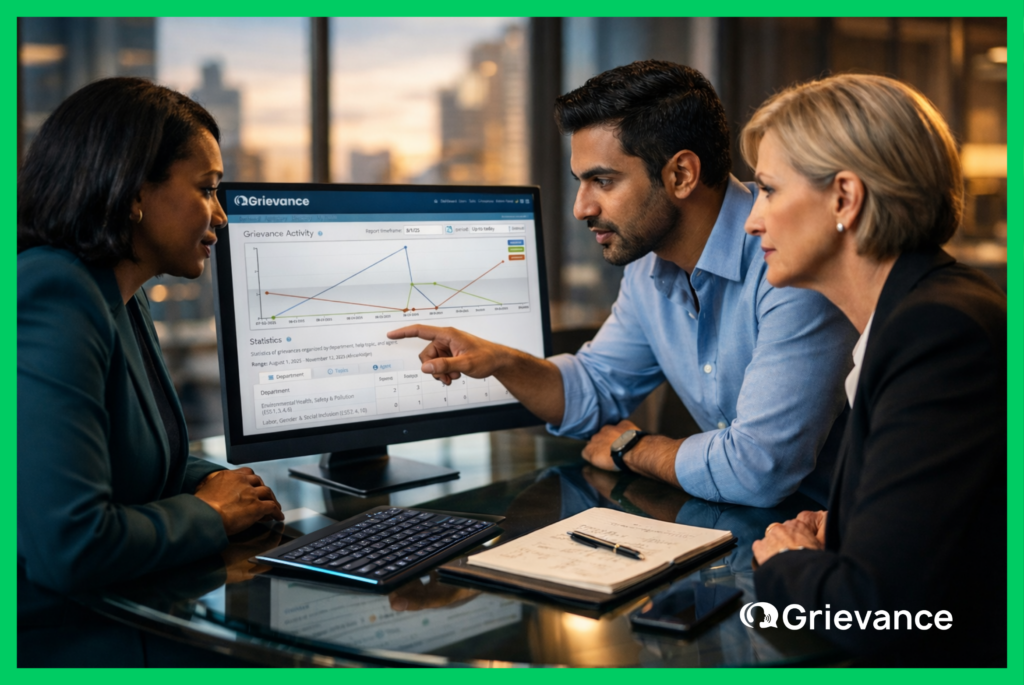
Unresolved complaints cost organizations far more than they realize. According to the International Finance Corporation (IFC), projects without a structured grievance redress mechanism face up to 3× higher risk of operational delays caused by community or employee disputes. Yet most organizations still manage complaints through spreadsheets, email threads, or informal conversations, processes that are invisible, unauditable, and impossible to scale.
A grievance management app changes that entirely. It transforms a fragmented, reactive process into a structured, traceable, and compliance-ready workflow, whether you manage an NGO project in a developing region, a multi-site corporation, or a financial institution subject to ESG disclosure requirements.
What Is a Grievance Management App?
A grievance management app is a digital platform that centralizes the intake, tracking, assignment, resolution, and reporting of grievances, complaints, and feedback from communities, or external stakeholders.
A grievance management app centralizes every complaint, from intake to closure, in a single auditable system. In practice, this means any person can submit a concern through a defined channel, and the system automatically routes it, enforces deadlines, documents every action, and generates compliance-ready reports.
In practice, any person, a worker, a community member, a supplier, can submit a concern through a defined channel. The system then routes it to the right team, tracks its status in real time, enforces response deadlines, and generates audit-ready reports. Nothing falls through the cracks. Every case is documented from submission to closure.
Why Spreadsheets and Email Inboxes Are a Compliance Liability
Most organizations believe they already manage grievances, because someone, somewhere, is collecting complaints. But collection is not management. When grievances live in unstructured systems, three critical failures become inevitable.
Cases Go Unresolved
No escalation trigger, no deadline enforcement, no visibility across teams. A complaint submitted three months ago may still be sitting in an inbox marked “to follow up.”
Reporting Becomes Fabrication
When auditors ask for grievance data, teams scramble to build reports retroactively. Numbers become estimates. Estimates become liability.
Affected Parties Lose Trust
When people submit a concern and hear nothing back, they don’t try again through formal channels. They escalate externally, to regulators, media, or legal counsel.
Audits Expose the Gaps
Donor frameworks and ESG regulations require traceable, time-bound grievance records. An email inbox provides neither. The consequences range from audit findings to funding suspension.
An employee complaint management system eliminates all three failure modes by design, replacing guesswork with structure, and opacity with a fully auditable case history.
Core Features That Define a Serious Grievance Management System
Not all tools are equal. When evaluating a grievance tracking tool for your organization, these are the capabilities that separate purpose-built platforms from generic ticketing systems.
-
1Multi-Channel Intake
Grievances should be submittable via web form, mobile, email, QR code, or offline formats for low-connectivity environments. Accessibility is a compliance requirement under IFC Performance Standard 1 and equivalent frameworks. -
2Anonymous Reporting Support
Affected parties, especially workers or community members in sensitive contexts, must be able to submit without fear of retaliation. Anonymity toggles and confidential routing are non-negotiable in high-risk project environments. -
3Automated Routing & SLA Enforcement
The system should automatically assign cases to the right team based on category, location, or severity, and trigger escalation alerts when deadlines are missed. -
4Full Case History & Audit Trail
Every action taken on a case, assignment, status change, communication, resolution, must be timestamped and immutable. This is the foundation of ESG reporting and due diligence documentation. -
5Multilingual & Multi-Site Architecture
Organizations operating across borders need a system that handles multiple languages, time zones, and organizational units within a single platform. -
6Reporting & Analytics Dashboards
Compliance officers and operations managers need real-time visibility into open cases, resolution rates, recurring issue patterns, and response times, not a monthly export from a spreadsheet.
Looking to see these features in action? Grievance App is built specifically for organizations that need to meet IFC, World Bank, and ESG grievance standards, with configurable workflows, anonymous intake, and audit-ready reporting.
Who Actually Needs a Grievance Management App?
The short answer: any organization with a formal accountability obligation to its stakeholders. But the drivers vary significantly by sector.
| Organization Type | Primary Driver | Key Framework |
|---|---|---|
| NGOs & Development Projects | Donor-mandated complaint mechanisms with documented, time-bound resolution | IFC PS1 / EBRD / ADB |
| Multinational Corporations | Operational-level grievance mechanisms required for workers and supply chain partners | EU CSDDD 2024 |
| Banks & Financial Institutions | Demonstrate functioning grievance systems in investee projects or accept portfolio risk | Equator Principles |
| Large Employers (HR) | Labor regulations require documented processes for complaints, harassment, and whistleblower disclosures | Labor Law / GDPR |
“
The stakes are not abstract. Inadequate grievance management directly translates to audit findings, funding loss, regulatory penalties, or litigation. The question is not whether you need a system, it is how long you can afford to operate without one.
How a Grievance Management App Works: The 5-Stage Workflow
According to best practices established by the IFC and aligned international frameworks, an effective grievance redress mechanism software follows five core stages. A purpose-built app automates the first three entirely, and provides the structure, reminders, and audit trail that make stages four and five consistent and defensible.
What you need to remember about grievance management apps
- →A grievance management app centralizes complaint intake, tracking, and resolution in a single auditable system — replacing spreadsheets and email threads.
- →Organizations subject to IFC PS1, World Bank ESS10, EU CSDDD, or Equator Principles have a compliance obligation to maintain a functional, documented grievance mechanism.
- →Purpose-built platforms include anonymous intake, multilingual support, SLA enforcement, and audit trails that generic ticketing tools cannot replicate.
- →The ROI is measurable: preventing two major dispute escalations per year typically exceeds 300% return on platform investment.
Frequently Asked Questions
Everything you need to know about grievance management apps, how they work, and whether your organization needs one.
What is a grievance management app?
+
A grievance management app is software that allows organizations to receive, track, assign, and resolve complaints or concerns from employees, communities, or other stakeholders. It replaces informal, unstructured processes with a centralized, auditable system that enforces deadlines, documents every action, and generates compliance-ready reports.
How is a grievance management app different from a ticketing system?
+
General ticketing tools are built for IT support or customer service, not for compliance-sensitive grievance redress. A grievance management app includes specific features like anonymous intake, multilingual support, SLA-based escalation, and audit trails aligned with IFC or ESG reporting standards. These are not available in standard helpdesk platforms.
What organizations are required to have a grievance mechanism?
+
Organizations subject to IFC Performance Standards, Equator Principles, EBRD Environmental and Social Policy, EU CSDDD, or UN Guiding Principles on Business and Human Rights are typically required to maintain a formal, accessible grievance mechanism. This includes development projects, listed companies, financial institutions, and their supply chain partners.
Can a grievance management app handle anonymous complaints?
+
Yes. Purpose-built platforms like Grievance App support anonymous submission channels where the complainant’s identity is either withheld from the assigned team or encrypted and accessible only to designated administrators, protecting submitters while maintaining full case integrity.
What should I look for when choosing grievance management software?
+
Prioritize: multi-channel intake, anonymous reporting support, automated routing with SLA enforcement, full audit trail, multilingual capabilities, and reporting dashboards aligned with your compliance framework. Avoid generic tools that require heavy customization to meet grievance-specific regulatory requirements. Purpose-built solutions like Grievance App are designed from the ground up for IFC, World Bank, and ESG compliance contexts.
The Cost of Waiting Is Higher Than You Think
Regulatory frameworks are tightening. ESG disclosure requirements are expanding. Affected communities and workers have more channels than ever to escalate unresolved concerns. A structured grievance mechanism is no longer a best practice, it is a baseline expectation for any accountable organization.
Related Reading