
Hydropower Grievance Management in Nepal: How Digital GRM Transforms Community Relations in Energy Projects
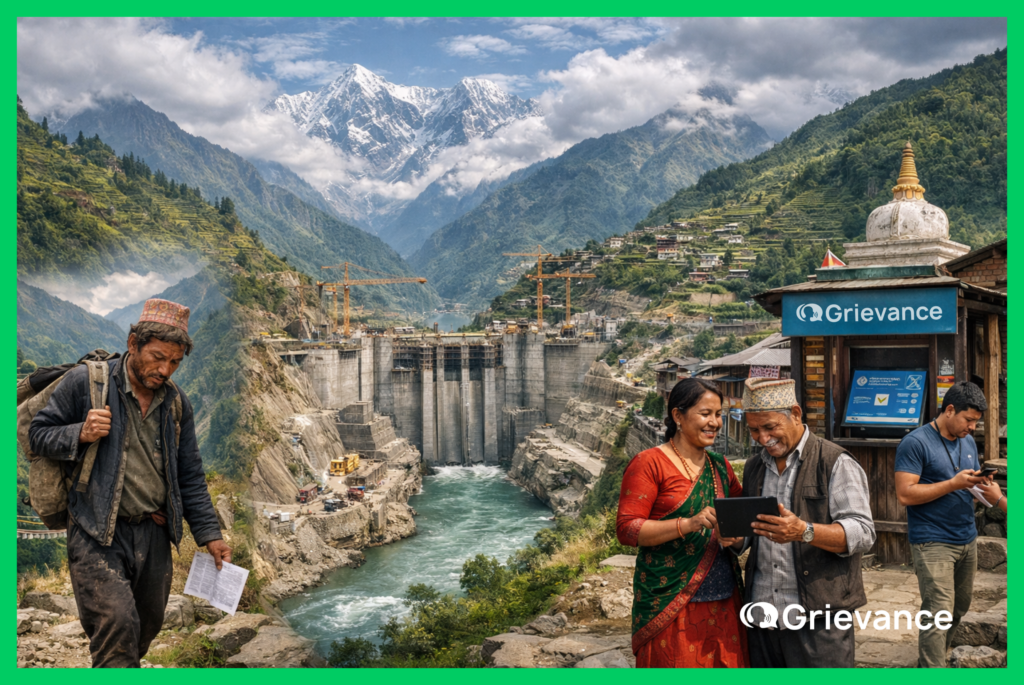
Nepal stands at a critical juncture in its energy development journey. With over 5,000 megawatts of hydropower capacity under construction and an estimated potential of 42,000 MW from its Himalayan rivers, the nation is racing to transform water into economic prosperity. Yet beneath this ambitious expansion lies a mounting crisis that threatens to derail billions in infrastructure investment: the systematic failure of hydropower grievance management in Nepal systems to address community concerns.
Communities affected by dam construction, involuntary resettlement, land acquisition, and environmental degradation are filing thousands of grievances annually. Independent assessments reveal that 60-70% of these complaints remain unresolved or inadequately addressed through traditional paper-based mechanisms. The consequences extend far beyond frustrated stakeholders, project delays now average 18-24 months beyond scheduled timelines, violent protests have escalated in multiple districts, and international financial institutions are withholding disbursements pending safeguard compliance.
The fundamental challenge is clear: Nepal’s hydropower sector cannot achieve sustainable growth without transforming how it manages social risk. This article examines how digital grievance mechanism hydropower solutions offer not merely an incremental improvement, but a fundamental restructuring of stakeholder engagement, converting grievance management from a compliance burden into a strategic asset for project success.
For hydropower developers, ESG consultants, and international financial institutions working in Nepal, the ability to effectively manage community engagement in Nepal energy projects is no longer optional. It is a strategic imperative that directly impacts a project’s social license to operate, its access to international financing, and its long-term viability in one of Asia’s most challenging operational environments.
MW of hydropower under development in Nepal
of grievances unresolved with traditional systems
The Perfect Storm: Why Hydropower Grievance Management Nepal Faces Unprecedented Challenges
Nepal’s hydropower sector operates within a uniquely complex environment that amplifies grievance management challenges exponentially. The convergence of geographic isolation, linguistic diversity, stakeholder fragmentation, and stringent international compliance standards creates operational conditions unlike anywhere else in the global energy sector.
Geographic and Infrastructure Barriers
The Himalayan terrain presents logistical nightmares for traditional grievance systems. Project-affected communities often reside in remote valleys accessible only by foot trails, where a single complaint submission might require a two-day journey. Mobile network coverage remains patchy across construction zones, while electricity access ironically, in regions building power generation capacity, fluctuates unpredictably.
- ●Remote accessibility: Over 70% of hydropower projects located in districts classified as “remote” or “very remote”
- ●Distance barriers: Average distance from affected communities to project offices: 15-40 kilometers
- ●Seasonal constraints: Accessibility limited during monsoon periods (June-September)
- ●Infrastructure gaps: Limited postal infrastructure in mountainous regions
Linguistic and Cultural Complexity
Nepal’s extraordinary diversity translates into grievance management nightmares. With 123 languages spoken across the nation and distinct ethnic communities holding different communication preferences, standardized complaint processes routinely fail. A Tamang-speaking farmer displaced by the Upper Tamakoshi project faces entirely different barriers than a Tharu resident affected by the Karnali development, yet both require equally effective grievance resolution.
Stakeholder Ecosystem Fragmentation
Modern hydropower projects involve Byzantine stakeholder networks: joint venture developers (often Indian or Chinese firms), Nepal Electricity Authority, multiple government ministries, international financial institutions, local governments, civil society organizations, and affected communities themselves. Traditional grievance mechanisms struggle to coordinate across this fragmented ecosystem, resulting in duplicated complaint handling efforts, contradictory responses from different project entities, lost grievances between organizational handoffs, and accountability gaps where no single entity owns resolution.
“
When communities perceive that their concerns disappear into bureaucratic voids, trust evaporates. This erosion of social license manifests through escalation from formal complaints to street protests.
Compliance Pressure from International Standards
International financing, which underwrites approximately $4.2 billion in current Nepal hydropower development demands rigorous adherence to safeguard policies. The World Bank’s Environmental and Social Standard 10 (ESS10), IFC Performance Standard 1, Asian Development Bank Safeguard Policy Statement, and Equator Principles all mandate functional, accessible, and transparent grievance redress mechanisms.
Non-compliance carries severe consequences: disbursement suspensions, reputational damage, and potential project cancellation. Yet paper-based systems cannot generate the audit trails, response time metrics, and resolution documentation that these standards require.
The Cost of Failure: Quantifying Traditional GRM Breakdown
Before exploring solutions, understanding the tangible impact of grievance management failures provides essential context for decision-makers evaluating digital transformation investments.
Project Delay Multipliers
Research across Nepal’s hydropower portfolio reveals that unresolved community grievances represent the single largest contributor to project delays beyond geological and technical challenges. Each month of delay in a 100 MW project represents approximately $8-12 million in lost revenue opportunity and continued construction financing costs.
- ●Average resolution time for land compensation disputes: 14-18 months
- ●Protest-related work stoppages: 45-90 days per major incident
- ●Legal challenges from inadequate grievance resolution: 12-36 months
- ●Cumulative delay impact across sector: estimated $400+ million annually
Social License Erosion and Compliance Jeopardy
When communities perceive that their concerns disappear into bureaucratic voids, trust evaporates. This erosion of social license manifests through escalation from formal complaints to street protests, transition from project-specific grievances to anti-hydropower movements, community coalitions forming across multiple project sites, and media campaigns that damage sector-wide reputation.
The 2019 protests against the Upper Tamakoshi project, partially triggered by accumulated unresolved grievances—resulted in property damage exceeding $2 million and national media coverage that negatively impacted investor confidence across Nepal’s entire energy sector. Between 2018-2023, at least seven major hydropower projects in Nepal received formal warnings regarding inadequate grievance redress mechanisms from their financiers.
Digital Transformation: How Technology Revolutionizes Hydropower Grievance Management Nepal
The transition from paper-based chaos to structured digital systems represents not incremental improvement but categorical transformation. Digital grievance mechanism hydropower platforms eliminate geography as a barrier, centralize case management, automate escalation protocols, and provide analytics for proactive conflict prevention.
Multi-Channel Accessibility for Remote Communities
Digital grievance mechanism hydropower platforms eliminate geography as a barrier through multiple simultaneous intake channels:
- ●Mobile applications functioning with intermittent connectivity, storing submissions locally until network access resumes
- ●SMS-based submission requiring only basic mobile phones ubiquitous even in remote areas
- ●Voice recording systems accessible via toll-free hotlines, with automated transcription in Nepali and major regional languages
- ●Web portals for stakeholders with reliable internet access
- ●Physical kiosk integration at project offices and community centers for individuals without mobile devices
Centralized Case Management with Transparency
Digital platforms consolidate all grievances, regardless of submission channel, into unified case management systems. This centralization eliminates lost or misfiled complaints, provides unique tracking identifiers for every submission, offers real-time status visibility for complainants, prevents duplicate handling efforts, enables pattern recognition across similar grievances, supports data-driven identification of systemic issues, facilitates evidence-based resource allocation, and generates comprehensive audit trails satisfying international compliance requirements.
Automated Escalation Preventing Resolution Delays
Perhaps the most powerful feature transforming community engagement Nepal energy projects is intelligent escalation protocols. Digital systems automatically flag cases approaching response deadline thresholds, escalate unresolved grievances to senior management levels, trigger notifications to responsible officers, generate compliance alerts when service level agreements risk violation, and route complex cases requiring specialized expertise to appropriate departments.
This automation converts grievance resolution from a passive, ad-hoc process into an active, deadline-driven workflow that protects both community rights and project timelines.
A Hypothetical Use Case: Upper Karnali Digital GRM Deployment
To demonstrate practical application, consider a hypothetical 900 MW Upper Karnali Hydropower Project implementing comprehensive digital grievance management. The project faced typical Nepal hydropower grievance management obstacles: 45 villages across three districts in project impact zone, 8,200 project-affected persons speaking five primary languages, and a paper-based system receiving 60-80 grievances monthly with an average resolution time of 127 days and 68% of complaints unresolved beyond the 90-day target.
The Three Phases of Digital GRM Deployment
Platform configuration for Upper Karnali context, translation into Nepali, Tharu, and Magar, training for 15 community liaison officers, community awareness campaign across 45 villages, and toll-free hotline establishment. All submissions are automatically timestamped and assigned unique tracking IDs accessible via any channel.
Mobile application distribution, SMS keyword system activation, integration with project office systems, pilot testing in 10 villages, and feedback-based refinement. Key workflow features include automated routing to appropriate departments (environmental compliance, community relations, legal, or HR) based on pre-configured rules, with case managers receiving instant notifications bound by SLA-enforced response timelines.
- ●
Automated escalation: unresolved cases flagged to senior management beyond defined deadlines - ●
AI-assisted resolution: historical case data informs recommendations for recurring complaint types - ●
Inter-departmental coordination: environmental officers, legal counsel, and community liaisons collaborate within single case threads
Expansion to all affected communities, advanced analytics activation, and regular performance review cycles. The ESG director generates comprehensive quarterly grievance reports directly from the platform, detailing total complaints received by category and community, average resolution times, escalation rates, and evidence of complainant notification. Reports are fully audit-ready, aligned with IFC PS1 disclosure requirements and GRI 413 community engagement indicators.
Transformative Outcomes Within Six Months
The hypothetical deployment achieved remarkable results: complaint submissions increased 240% (indicating previously unvoiced concerns now finding expression), with 73% of submissions via mobile channels. Average resolution time decreased to 41 days, with 89% of grievances resolved within the 90-day target and zero escalations to protests or work stoppages. The system provided 100% audit trail availability for IFC compliance review, real-time dashboards eliminating quarterly manual report compilation, and positive assessment from World Bank safeguard missions. Community perception surveys showed 67% satisfaction increase, with the Project Developer recognized for GRM excellence by Nepal Hydropower Association.
Before vs. After: The Digital GRM Transformation
The operational transformation is not incremental; it is structural. The following comparison illustrates the concrete shift across the most critical grievance management dimensions in Nepal’s hydropower sector.
| Dimension | Before Digital GRM | After Grievance App |
|---|---|---|
| Submission Channel | Verbal / paper only | Mobile, SMS, voice, web, kiosk |
| Geographic Accessibility | 2-day travel required | 15-minute submission from home |
| Response Timeline | 127 days average | 41 days average |
| Resolution Rate | 32% within 90 days | 89% within 90 days |
| Audit Trail | None / incomplete | 100% timestamp logging |
| Language Support | Nepali only | Nepali + 5 regional languages |
| IFI Compliance Reporting | Manual / inconsistent | Auto-generated, IFC-aligned |
Meeting International Standards: ESG Compliance for Nepal Hydropower
International financing for Nepal’s hydropower sector increasingly requires demonstrated, functional grievance mechanisms as a precondition for project approval and continued disbursement. Grievance App’s architecture is explicitly aligned with the most demanding international frameworks currently in force.
Requires all IFC-funded projects to establish and maintain a structured, accessible, and culturally appropriate mechanism for receiving and facilitating resolution of affected communities’ concerns and grievances about the project’s environmental and social performance.
Mandates a grievance mechanism that is proportionate to project risks and impacts, transparent in its operation, consistent in its application, with documented evidence of responses and resolutions available to affected communities and financiers.
Requires borrowers to establish grievance redress mechanisms to receive and facilitate resolution of affected people’s concerns regarding environmental and social performance, particularly relevant for ADB-financed hydropower projects in Nepal.
The Equator Principles framework adopted by over 130 financial institutions requires borrowers to implement a grievance mechanism for project-affected parties as part of the environmental and social management system.
Strategic Advantages: Why Digital GRM Delivers Measurable ROI
Beyond compliance fulfillment, sophisticated digital GRM generates measurable business value that directly impacts project timelines, budgets, and community relationships.
Risk Mitigation Quantification
Each prevented work stoppage day represents substantial financial protection. For large hydropower projects, construction delay costs range from $15,000-$40,000 per day, while lost revenue from postponed commissioning can reach $30,000-$80,000 per day for a 100 MW project. Prevented property damage from protests represents high six-figure to seven-figure potential savings.
If digital GRM prevents just two major protest incidents annually, ROI exceeds platform investment by 300-500%.
“
Digital GRMs are no longer optional for Nepal’s hydropower sector. They represent essential infrastructure for any project seeking legitimate social license to operate in the Himalayan energy landscape.
Financing Relationship Enhancement
International financial institutions view functional digital GRM as a de-risking indicator. Projects demonstrating sophisticated grievance management receive expedited disbursement approval processes, reduced supervision intensity (lowering compliance costs), positive case studies enhancing developer reputation for future financing, and potential access to green or sustainable financing instruments with preferential terms.
Operational Intelligence Generation
Grievance data, properly analyzed, reveals community priorities informing CSR investment allocation, communication gaps requiring enhanced engagement, policy issues necessitating government coordination, and training needs for field staff based on resolution quality patterns. This intelligence transforms GRM from cost center to strategic information asset.
Grievance App: Purpose-Built Solution for Nepal’s Hydropower Challenges
While multiple digital GRM platforms exist, Grievance App offers specific capabilities addressing Nepal hydropower sector requirements with proven effectiveness in challenging operational environments.
Nepal-Optimized Technical Architecture
Grievance App’s offline-first design specifically addresses Nepal’s infrastructure constraints with full functionality despite intermittent connectivity, low bandwidth requirements suitable for 2G and 3G networks, mobile applications consuming minimal device storage, and rapid synchronization when connectivity becomes available.
Compliance-Ready Documentation
The platform generates audit trails and compliance reports aligned with World Bank ESS10 requirements, IFC Performance Standards documentation expectations, ADB Safeguard Policy Statement reporting formats, and Equator Principles Project Finance disclosure standards.
Scalable Multi-Project Deployment
For developers managing multiple concurrent projects, Grievance App enables centralized oversight across entire portfolios, project-specific customization maintaining brand consistency, comparative performance analytics identifying best practices, and economies of scale reducing per-project implementation costs.
Deploy Purpose-Built Digital GRM for Your Nepal Hydropower Project
Grievance App is operational, configurable, and ready to scale across Nepal’s hydropower corridors. From multi-channel community access to audit-ready ESG reporting, one platform, fully aligned with IFC PS1, World Bank ESS10, ADB SPS, and Equator Principles standards.
Frequently Asked Questions
Everything you need to know about hydropower grievance management Nepal, digital GRM implementation, and ESG compliance for energy infrastructure projects.
What is hydropower grievance management and why is it critical for Nepal projects?
+
Hydropower grievance management refers to systematic processes for receiving, investigating, and resolving complaints from project-affected communities regarding land acquisition, environmental impacts, compensation disputes, and construction effects. In Nepal, where over 5,000 MW of capacity is under development, effective grievance management determines whether projects maintain social license or face protests, delays, and financing jeopardy. International financial institutions require functional GRM as mandatory safeguard compliance, making it essential for securing and maintaining project funding.
How do digital grievance mechanisms improve upon traditional paper-based systems in remote Himalayan regions?
+
Digital platforms eliminate geographic barriers through multi-channel accessibility, mobile apps, SMS, voice hotlines, and web portals, enabling communities to submit complaints without traveling to distant project offices. Offline functionality addresses connectivity constraints, while automated tracking prevents lost complaints common in paper systems. Real-time analytics provide early warning of emerging conflicts, and comprehensive audit trails ensure compliance with IFC, World Bank, and ADB safeguard requirements that paper systems struggle to demonstrate.
What are the implementation costs and timelines for deploying digital GRM in Nepal hydropower projects?
+
Typical implementation timelines range from 12-16 weeks, encompassing baseline assessment, platform configuration, training, and phased rollout. Costs vary based on project scale, grievance volume, and customization requirements, but generally prove cost-neutral within 8-14 months when accounting for reduced administrative overhead, prevented delay costs, and enhanced compliance. Most platforms offer scalable subscription models rather than large upfront capital expenditure, making them accessible even for mid-sized projects.
Can digital GRM platforms accommodate Nepal’s linguistic diversity and low digital literacy populations?
+
Modern platforms specifically address these challenges through multi-language interfaces supporting Nepali and regional languages, voice-based submission requiring no typing, SMS keywords accessible via basic mobile phones, and visual navigation reducing text dependency. Community facilitators can assist submission when needed. Field experience across similar contexts demonstrates 80%+ adoption rates in low-literacy populations when combined with orientation sessions. The technology adapts to users rather than requiring users to adapt to technology.
How does digital grievance management satisfy international financial institution compliance requirements?
+
Digital platforms generate comprehensive audit trails documenting every submission, investigation step, stakeholder communication, and resolution decision, meeting World Bank ESS10, IFC PS1, ADB SPS, and Equator Principles documentation standards. Real-time dashboards provide immediate compliance reporting, eliminating manual quarterly report compilation. Automated service level agreement tracking ensures response deadlines are met, while analytics demonstrate systemic improvements over time. These capabilities transform compliance from burden to competitive advantage, strengthening relationships with project financiers.
Related Reading