
How a Digital Grievance Redress Mechanism Strengthened Accountability in a World Bank–Funded Urban Resilience Project
Large development projects often struggle with accountability and community trust, especially when local grievances go unaddressed. The Resilient Urban Sierra Leone Project (RUSLP), a World Bank–funded urban resilience initiative, faced this challenge head-on by implementing a digital grievance redress mechanism. RUSLP, funded by the International Development Association (IDA) of the World Bank and led by the Government of Sierra Leone, aims to improve integrated urban management, service delivery, and disaster emergency management across Freetown and several secondary cities.
With diverse stakeholders and potential social impacts, the project recognized that timely and transparent handling of complaints was critical for success. A cutting-edge digital grievance redress mechanism (GRM) was deployed as a solution, providing citizens with a voice in the project and ensuring that every concern is logged, tracked, and resolved.
This case study explores how the RUSLP’s digital grievance redress mechanism strengthened project accountability and enhanced stakeholder trust. We’ll delve into why this mechanism was needed, how it was implemented, and the remarkable outcomes achieved, including faster resolution of issues and greater community engagement. By aligning with World Bank standards and leveraging modern technology, RUSLP’s approach offers valuable lessons for governments, NGOs, and donors on using digital tools to boost transparency, stakeholder feedback, and citizen engagement in large projects.
Why RUSLP Needed a Digital Grievance Redress Mechanism
In a complex urban project like RUSLP, countless individuals and groups are affected, from local residents to contractors, city councils, and NGOs. Citizens’ engagement was placed at the core of the project, with communities involved at all stages of preparation and implementation. This meant establishing clear channels for those who might be aggrieved or adversely affected by project activities to voice their concerns and seek redress. Traditional paper-based complaint boxes or sporadic town hall meetings would not suffice for a project of this scale and importance. Key reasons RUSLP required a digital grievance redress mechanism included:
- Multiple Stakeholders and High Stakes: The project spans eight local councils and numerous agencies, raising the likelihood of grievances ranging from construction disturbances to resettlement issues and even gender-based violence concerns. A comprehensive project-wide GRM was needed to handle complaints from all stakeholders, whether directly or indirectly impacted, through a step-by-step process that anyone could access.
- Accountability and Transparency: RUSLP’s leadership understood that a robust grievance system is key to building public trust. They wanted a transparent and credible process for resolving complaints in a fair and timely manner. By giving each grievance a formal track, the project could demonstrate it was listening to feedback and taking corrective actions. In fact, implementing a formal grievance process clearly signals accountability; it shows the government and project implementers are responsive to citizens’ concerns.
- World Bank Requirements: As a World Bank–funded project, RUSLP is mandated to have an effective grievance redress mechanism for project-affected people. The World Bank and other international donors require such mechanisms to ensure complaints are heard and resolved before they escalate, especially in projects with significant social or environmental impacts. Under the Bank’s Environmental and Social Standard 10 (ESS10), for example, every major project must have a grievance mechanism accessible to all stakeholders. The digital GRM for RUSLP was designed to meet these standards, aligning with global best practices for project accountability and compliance.
- Efficiency and Reach: A digital grievance redress mechanism enables multi-channel grievance submission, allowing people to raise issues through convenient channels such as a mobile app, a toll-free phone line, SMS, or an online portal. This was crucial in Sierra Leone, where project sites are spread across urban and rural areas. Digital intake removed geographic and office-hour barriers; anyone could complain anytime, anywhere. Moreover, digitizing the process promised faster response times and better tracking than a manual system, which is vital for keeping stakeholders satisfied.
By opting for a digital solution, RUSLP aimed to “provide project-affected persons the opportunity of a step-by-step process to seek redress”, accessible through multiple grievance uptake channels, and to “resolve complaints in a timely, effective and efficient manner” that satisfies all parties. In short, the project needed a modern grievance mechanism to uphold accountability, prevent small issues from becoming big problems, and uphold the social contract with its beneficiaries.
Implementing a Digital Grievance Redress Mechanism in RUSLP
Deploying a digital grievance redress mechanism for RUSLP was a carefully planned effort. The process ensured that the system would be effective, user-friendly, and well-integrated into the project’s operations. Here are the key steps and features involved in implementing the RUSLP’s digital GRM:
- Thorough Planning and Design: The implementation team began with an in-depth analysis of RUSLP’s context. They reviewed project documents (e.g. the Project Appraisal Document and Stakeholder Engagement Plan) and interviewed key stakeholders to understand existing complaint-handling processes. This informed a detailed system design that emphasised sustainability and government ownership. The GRM’s software and hardware architecture was crafted to avoid vendor lock-in, so that the Government of Sierra Leone would retain full control and be able to integrate the platform with existing infrastructure. This focus on local ownership meant the grievance system would continue to serve the public long after external consultants left.
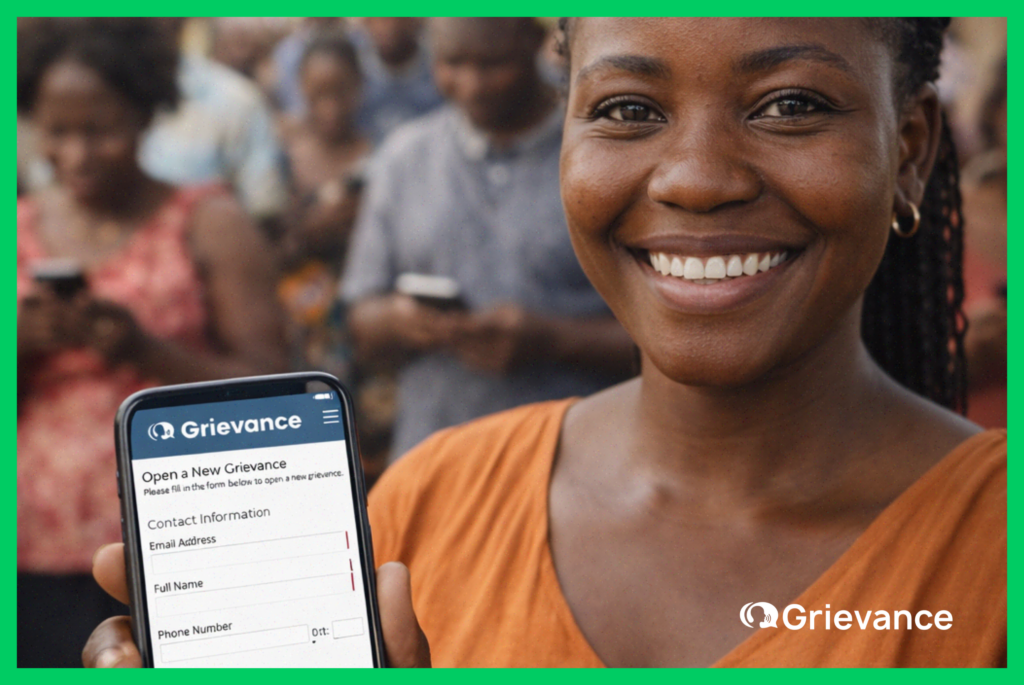
- Multi-Channel Access: A hallmark of the RUSLP grievance mechanism is its multi-channel accessibility. The digital platform enables grievance uptake through various channels, including a web portal, a mobile application, in-person offices at project sites, and a toll-free telephone hotline. This ensured that community members could choose the most convenient method to voice their complaints. For example, someone without internet access could call the toll-free line, while a city resident with a smartphone could use the mobile app. All these channels feed into one unified system. Notably, every grievance submitted is immediately assigned a unique tracking number, allowing the complainant and project staff to track its progress and responses online. This tracking feature provides full transparency, with a secure archive of all grievances and how they were addressed, which is the backbone of accountability.
- Development and Integration: The GRM software was developed and configured according to the project’s timeline and needs. This included setting up a centralised database and user interface for case management. The platform was integrated with existing government systems where possible, for instance, linking with municipal service departments so that complaints about waste management or infrastructure could be routed to the right teams seamlessly. A mobile app was launched for on-the-go access, and an internal dashboard enabled project officials to monitor incoming grievances in real time. Automation features were incorporated to send acknowledgements and status updates to complainants, ensuring complainants knew their issue was being handled. Crucially, the system was configured to support multiple languages and anonymous submissions (important for sensitive issues like GBV), making it inclusive and secure.
- Rigorous Testing: Before full rollout, the digital GRM underwent extensive testing. This included functionality tests, load/performance tests to ensure it could handle surges in input, usability testing with actual community members, and security audits. Testing helped fine-tune the system, for example, simplifying the complaint submission form and ensuring the mobile app worked on low-end Android phones common in the region. By the end of this phase, the project team was confident that the platform was robust, user-friendly, and secure against data breaches. Importantly, the grievance process was tested for compliance with World Bank guidelines, e.g. verifying that each grievance would be acknowledged and responded to within set timeframes (the project set a target of an initial response within one week and resolution within 30 days for most cases).
- Training and Capacity Building: A digital tool is only as good as the people running it. RUSLP invested in training local staff and officials on the new grievance mechanism. Dedicated training sessions taught grievance officers and administrators how to log cases, update statuses, and generate reports from the system. Role-specific training was given to call centre operators for the hotline and IT personnel for system maintenance. In addition, user guides and manuals were developed so that knowledge can be transferred easily even if staff change. This capacity building ensured that the GRM would be operated professionally and sustainably by Sierra Leonean stakeholders, embedding the mechanism into the project’s governance structure.
- Launch, Support, and Awareness: With the system live, the project rolled out a public awareness campaign so that citizens knew how to use the grievance mechanism. They advertised the toll-free number, the web portal link, and the availability of the mobile app in community meetings, local radio, and social media. The early uptake was encouraging, and community members began submitting feedback on issues like waste collection points and construction disturbances. The consultant provided one year of post-launch support and maintenance to ensure any technical glitches were quickly fixed. This included regular monitoring, software updates, and responding to user feedback to improve the system. By continuously publicising success stories (for instance, a complaint about a blocked drain resolved in days), the project reinforced public trust in the GRM.
Through these steps, the RUSLP established a digital grievance redress mechanism that was fully operational and accessible. The system embodies best practices: real-time tracking, multi-channel access, and secure data management, all tailored to the local context. Such a platform effectively turns the grievance process into a two-way communication channel; not only are citizens reporting problems, but the project can proactively inform citizens of resolutions, truly closing the feedback loop.
Strengthening Accountability through Transparency and Engagement
Implementing the digital GRM in RUSLP has tangibly strengthened accountability and transparency in the project. By formally tracking every complaint and its resolution, the project created an environment where officials are answerable to the public and stakeholder feedback directly informs project improvements. Here are the key ways the digital grievance redress mechanism bolstered accountability and trust:
- Timely Resolution of Grievances: Perhaps the most impressive outcome has been the speed-up in addressing issues. The digital system reduced grievance resolution times by 70% on the project, compared to traditional methods. Faster resolution is not just a statistic; it means that if a market trader complains about road access being blocked by construction, that issue is now resolved in days instead of weeks. This agility in responsiveness shows stakeholders that the project is serious about its commitments. It also helps the project stay on schedule by clearing roadblocks promptly. In development projects, delays and conflicts often arise when complaints fester; RUSLP’s GRM ensured that grievances were “nipped in the bud” through prompt action.
- Transparency and Audit Trail: The digital grievance redress mechanism introduced an unprecedented level of transparency. Every grievance is timestamped, recorded, and tracked through its five-stage resolution process, from receive & acknowledge to investigation, feedback, and close-out. Both the complainant and project managers can see the status of a case at any time. This clear audit trail means there’s no hiding or forgetting a complaint. Project management can produce reports on how many issues were raised and resolved, and within what timeframe, which is crucial for audits and oversight. The World Bank project team and government supervisors have used GRM data to demonstrate they are responding to public feedback, adding a layer of formal accountability to project governance. By logging all grievances and actions, the GRM provides hard evidence that the project is addressing concerns fairly, protecting against allegations of negligence or bias.
- Building Trust through Participation: A transparent process for complaints has greatly improved community relationships. When people see that their complaints, whether about a cracked drainage channel or excessive dust from project trucks, are taken seriously and addressed, it builds goodwill. Each resolved grievance becomes an example of the project’s accountability and respect for citizens. Over time, this has turned sceptics into project supporters. Stakeholder trust increased significantly thanks to the GRM’s efficiency and openness. As noted in the project’s results, the combination of transparency and timely redress “built greater trust among stakeholders, fostering a cooperative environment”. Communities that might have been hostile or doubtful about the project became partners in monitoring it, because they now had a say and saw real responses to their input. This trust and cooperation are invaluable in an urban resilience project that requires citizen buy-in for activities like waste management or disaster preparedness to succeed.
- Inclusive & Responsive to Sensitive Issues: RUSLP’s grievance mechanism was designed to handle all types of feedback, not just generic complaints, but also sensitive issues such as gender-based violence (GBV) or environmental concerns. By offering options like anonymous reporting and ensuring GBV-related grievances are resolved within 30 days, the system showed that accountability extends to protecting vulnerable groups. For instance, if a woman working on a project site faces harassment, she has a safe channel to report it and is guaranteed a prompt response and support. This inclusivity enhances the project’s social accountability and aligns with the government’s commitment to address GBV as a national emergency. Moreover, the GRM’s data analytics helped identify recurring issues (e.g., multiple complaints from one neighbourhood about flooding), enabling the project team to address root causes, not just individual symptoms. This proactive approach prevents future grievances and shows stakeholders that their feedback is driving continuous improvement.
- Accountable Culture and Better Services: By institutionalising grievance redress, RUSLP helped instil a culture of accountability within the implementing agencies. Staff know that any lapse or issue will likely be reported through the GRM, logged, and must be resolved. This has encouraged project staff and contractors to adhere to higher standards in their work, knowing they are under public scrutiny. The direct result has been enhanced urban management and service delivery in the project areas. For example, if garbage collection in a community was inconsistent and drew complaints, the city council swiftly rectified the schedule, improving the service for everyone, not just the complainant. In essence, the GRM turned complaints into actionable insights for better governance. It also provided metrics that could be shared with stakeholders: the project could publicly report how many grievances were addressed, showcasing accountability in numbers. As a World Bank review noted, a good grievance mechanism “puts real metrics behind transparency and participation”, which RUSLP achieved through its regular reporting on the GRM performance.
The experience of RUSLP demonstrates that a digital grievance redress mechanism is far more than a bureaucratic requirement; it is a strategic tool for project success. By handling complaints efficiently, transparently, and fairly, the project not only met compliance standards but also upheld its social license to operate. Development initiatives can draw a powerful lesson here: embracing a digital GRM can convert community grievances into opportunities for dialogue and improvement, ultimately strengthening the accountability and resilience of the project.
Conclusion: Paving the Way for Accountable Urban Development
The RUSLP case study showcases how a well-implemented digital grievance redress mechanism can transform accountability in development projects. By giving citizens an accessible platform to raise concerns and by responding to those concerns in a transparent, timely manner, the project created a virtuous cycle of feedback and improvement. Accountability was no longer just a buzzword; it became embedded in daily project operations, visible in the prompt resolution of community issues and the data-driven oversight of project performance. The World Bank and government partners now view RUSLP’s GRM as a model for other projects in the region.
For governments, NGOs, and donors, the implications are clear. In an era where stakeholder engagement and trust are paramount, investing in a digital grievance redress mechanism is a smart strategy. It helps ensure projects deliver not just on their physical outputs but also on governance principles, transparency, inclusion, and responsiveness. As we’ve seen, this leads to more sustainable outcomes: problems are resolved before they escalate, communities support rather than oppose the project, and the project achieves its objectives of improved services and resilience.
Grievance App, the provider of RUSLP’s GRM platform, has been instrumental in this success, delivering a secure, customizable system and ongoing support to keep the mechanism effective. The result is a stronger accountability framework for all stakeholders involved. If your organisation is looking to boost accountability and citizen engagement in its projects, consider following RUSLP’s example.
Request your free demo of Grievance App to see how a digital GRM can help turn complaints into opportunities and ensure every voice is heard in your projects.
FAQ: Digital Grievance Redress Mechanisms in Development Projects
Q1. What is a digital grievance redress mechanism, and how does it work?
A digital grievance redress mechanism is an online system that allows organisations to receive, track, and resolve complaints from stakeholders in real time. It works by providing multiple channels (web portal, mobile app, hotline, etc.) for people to submit grievances, which are then logged in a centralised database. Each grievance is assigned a tracking number for transparency. Project staff review the issue, investigate as needed, and respond through the system. Throughout the process, the complainant can check the status of their case and is notified of updates and the final resolution. This ensures a structured, accountable approach to handling grievances.
Q2. Why is a grievance redress mechanism important for World Bank–funded projects?
The World Bank requires grievance redress mechanisms in the projects it funds to ensure project-affected people have a voice and issues are resolved promptly. These mechanisms are vital for managing social and environmental risks. In World Bank–funded projects, a GRM builds trust by addressing local concerns before they escalate, helping maintain the project’s smooth implementation. It’s also a compliance requirement under the Bank’s safeguard policies (e.g., ESS10) that reflects good governance and accountability. Essentially, a GRM in a World Bank project protects both the community and the project: it provides a fair process for complaints and helps avoid protests, delays, or reputational damage by solving problems early.