
World Bank Grievance System: Why Every Funded Project Now Needs a Digital GRM
World Bank Grievance System
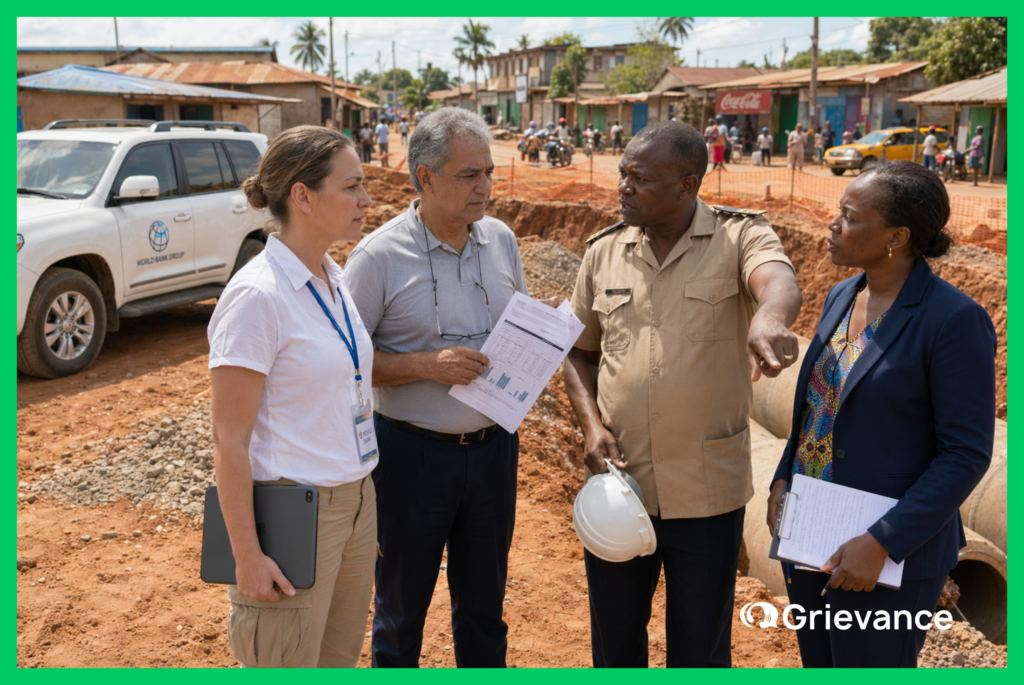
A road project in West Africa. Hundreds of families are displaced. Compensation delays pile up for months. Residents file complaints on paper forms that end up in a drawer no one opens. By the time the project team notices, three villages have organized a blockade. Construction stops for 14 weeks.
This scenario plays out more often than anyone in the development sector likes to admit. The World Bank knows it, which is why its Environmental and Social Framework (ESF) now sets strict requirements for how projects handle complaints. Every project with significant environmental or social impacts must establish a grievance redress mechanism (GRM) that actually works, not just one that exists on paper.
Most project teams still run their World Bank grievance system on spreadsheets, paper logbooks, or disconnected email threads. That approach worked in 2005. It does not work when you are managing thousands of stakeholders across multiple sites, reporting to donors quarterly, and facing ESS10 audits that demand full traceability. This is the gap that digital GRM platforms like Grievance App fill. And the shift from manual to digital is no longer optional for serious project teams.
A World Bank grievance system is a structured mechanism required under the Environmental and Social Framework (ESF) that allows project-affected people to submit complaints, track resolution, and receive timely responses. A digital GRM uses technology to make this process accessible, transparent, and auditable at scale.
What the World Bank Actually Requires Under ESS10
Three compliance dimensions that auditors check every time
The World Bank’s Environmental and Social Standard 10 (ESS10) on Stakeholder Engagement and Information Disclosure is the reference document here. It requires borrowers to establish a grievance mechanism that is proportionate to the risks and impacts of the project, accessible to all affected parties, and transparent in how complaints are handled.
Three things matter to auditors when they review a project’s World Bank grievance system.
Projects that fail to meet these requirements face real consequences: additional supervision missions, remedial action plans, and, in extreme cases, suspension of disbursements.
Why Paper-Based Grievance Systems Fail World Bank Projects
Five predictable breakdowns that digital systems eliminate
A paper-based or spreadsheet-based GRM can technically check the compliance box. In practice, it creates predictable problems that surface during every supervision mission.
Lost Complaints
A field officer collects a form, puts it in a folder, and that folder travels (or doesn’t travel) to the project management unit. No one notices until a supervision mission asks why the project logged only 12 complaints in a district with 40,000 affected people.
Missed Deadlines
When tracking happens in Excel, there is no automatic alert when a case hits its 15-day deadline. The project coordinator finds out at the quarterly review, weeks after the deadline has passed.
Slow Reporting
Preparing a grievance report for a World Bank supervision mission means pulling data from multiple spreadsheets, cross-referencing dates, and manually calculating resolution rates. Time the team could spend actually resolving complaints.
Limited Access
A paper system usually means one channel: walk into an office and fill out a form. That excludes people who live far away, people with disabilities, women in contexts where visiting a project office alone is not safe, and anyone who fears being identified.
Siloed Data
Without analytics, the project team cannot see that 60% of complaints point to the same contractor or that one district generates ten times more grievances than others. Paper systems bury these signals.
Still running your World Bank grievance system on spreadsheets? Grievance App replaces paper-based processes with automated workflows, real-time tracking, and audit-ready reports that satisfy ESS10 requirements.
How a Digital GRM Transforms World Bank Grievance Handling
What actually changes when you move from paper to platform
Switching to a digital World Bank grievance system changes the game on every dimension that ESS10 cares about. Here is what shifts in practice.
| Capability | Paper / Spreadsheet GRM | Digital GRM Platform |
|---|---|---|
| Complaint logging | Manual entry, days between filing and registration | Instant timestamp, unique case ID, auto-categorization |
| Escalation | Depends on individual staff initiative | Automatic alerts at 5, 30, and 60 days |
| Audit trail | Scattered records, manual compilation for reports | Full traceability, one-click report export |
| Accessibility | One channel: walk-in office visit | Web, mobile, SMS, WhatsApp, phone, kiosks |
| Language support | National language only | 50+ languages, including local dialects |
| Analytics | Quarterly manual review | Real-time dashboards with trend detection |
Grievance App does this across multiple intake channels: web forms, mobile app, SMS, phone hotline, and WhatsApp. A farmer in a rural area can send an SMS in Wolof, and the system logs it just as precisely as a complaint filed through the web portal in English.
On one World Bank-funded water and sanitation project, implementing automated escalation cut the average resolution time from 47 days to 18 days in the first quarter. That is a 62% reduction. Deadlines stopped being invisible.
Analytics reveal what project teams cannot see on their own. One project using Grievance App discovered that 73% of environmental complaints in a specific zone pointed to a single subcontractor dumping construction waste illegally. Without the analytics dashboard, that pattern would have stayed hidden in individual case files.
What Donors and Supervisors Actually Look For
Zero complaints is a red flag, not a green light
World Bank task team leaders (TTLs) and social safeguards specialists review GRM performance during supervision missions. They are not looking for zero complaints. A project with very few grievances raises red flags, because it often means the GRM is inaccessible, not that the project is problem-free.
They look for volume appropriate to the project’s footprint and risk level. They look for documented evidence that complaints are processed within defined timelines. They look for disaggregated data, by gender, by location, by category, so they can assess whether vulnerable groups are using the mechanism.
They also look at resolution quality. A complaint marked “resolved” in the system is not enough. Supervisors want to see what action was taken and whether the complainant was informed of the outcome. A digital GRM makes all of this visible. A paper system makes all of it a guessing game.
Selecting the Right Digital GRM for World Bank Projects
Generic helpdesks and CRMs will not meet ESS10 standards
Not every software tool is built for the specific requirements of development projects. A generic helpdesk or CRM will not meet ESS10 standards out of the box. The platform should allow customizable intake forms that match World Bank reporting categories. It should support offline data collection for field teams working in areas without internet. It should include role-based access controls so that sensitive complaint data is only visible to authorized personnel. It should encrypt data at rest and in transit, meeting international data protection standards like GDPR. And it should generate reports that align with World Bank supervision requirements without requiring manual formatting.
Grievance App was built specifically for this use case. It is used by government agencies, NGOs, and multilateral development banks across Africa, Asia, and Latin America. The platform aligns with World Bank ESS10, IFC Performance Standards, and UN accountability frameworks. It handles everything from intake to resolution to donor reporting in a single system.
The Cost of Not Going Digital
The math does not support hesitation
Project teams sometimes hesitate to adopt a digital World Bank grievance system because of perceived cost or complexity. A single project delay caused by an unresolved community conflict costs far more than a year of GRM software.
According to World Bank project documentation, a two-week construction stoppage on a $50 million infrastructure project can cost $500,000 or more in direct expenses, not counting reputational damage and the cost of emergency mediation. IFC research has consistently shown that unresolved grievances are among the top causes of project delays in emerging markets.
Digital GRM platforms like Grievance App operate on a SaaS model with pricing adapted to development project budgets. Setup takes days, not months. Training takes hours, not weeks. The real cost is doing nothing and hoping that paper forms and spreadsheets will hold up under the scrutiny of a World Bank supervision mission.
Why your World Bank grievance system needs to go digital now
Every unresolved grievance is a risk you can eliminate today.
Grievance App helps World Bank-funded projects centralise stakeholder complaints, automate workflows, and produce audit-ready reports in 50+ languages, on any device, with full ESS10 compliance.
Frequently Asked Questions
Common questions about World Bank grievance systems and digital GRM compliance.
What is a World Bank grievance system, and why does ESS10 require it? +
A World Bank grievance system is a structured mechanism that allows project-affected people to submit complaints, concerns, or feedback about a funded project. ESS10 requires borrowers to establish this mechanism so that communities have a clear, accessible, and responsive channel to raise issues. The goal is to resolve problems at the project level before they escalate into conflicts, legal disputes, or formal complaints to the World Bank’s Inspection Panel.
How does a digital GRM help meet World Bank compliance requirements? +
A digital GRM automates the tracking, documentation, and reporting that World Bank supervision teams expect. Every complaint receives a timestamp, a unique ID, and a documented resolution trail. Automatic escalation ensures deadlines are met. Reports on resolution rates, complaint categories, and processing times can be generated instantly for ISRs and supervision missions. This level of traceability is extremely difficult to achieve with manual systems.
Can a digital grievance platform work in remote areas with limited connectivity? +
Yes. Platforms like Grievance App support offline data collection through mobile apps, so field officers can log complaints without internet access and sync them when connectivity is restored. SMS-based submissions also work in areas where smartphones are not common. This ensures that geographic remoteness does not become a barrier to GRM accessibility, which is a core ESS10 requirement.
What types of World Bank projects need a grievance redress mechanism? +
Any World Bank-funded project with environmental or social risks needs a GRM. This includes infrastructure projects (roads, bridges, energy), social development programs (education, health, social protection), agriculture and water management projects, and urban development initiatives. The scale and complexity of the GRM should be proportionate to the project’s risks and the number of affected stakeholders.
How quickly can a digital GRM be deployed on a World Bank project? +
Grievance App can be configured and deployed within days. The platform offers pre-built templates aligned with World Bank reporting requirements, so project teams do not need to build forms or workflows from scratch. Training for project staff typically takes a few hours. Most teams are fully operational within the first week of deployment.